Ted Turner, Visionary Media Titan and CNN Founder, Passes Away at 87

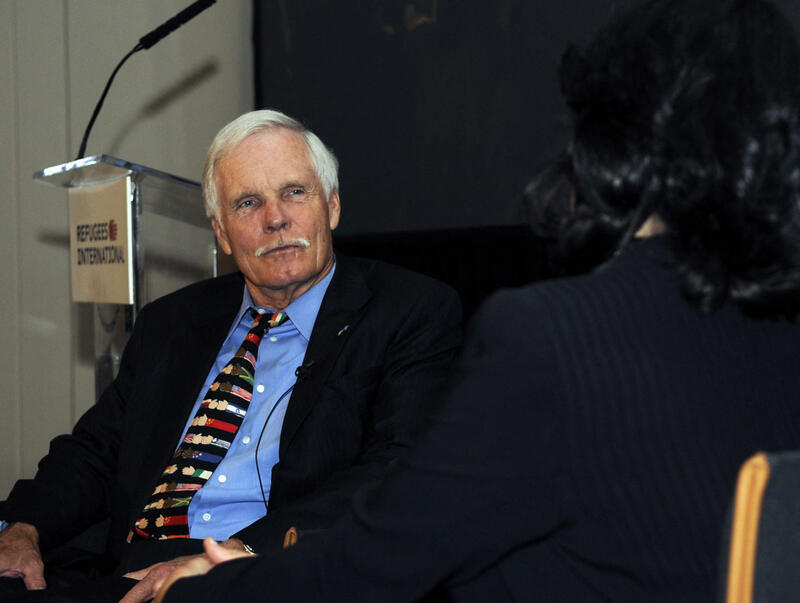
The world of global media is mourning the loss of a true pioneer. Ted Turner, the visionary entrepreneur who fundamentally reshaped how the world consumes information, has died at the age of 87. As the founder of the Cable News Network (CNN), Turner did more than just launch a television channel; he effectively invented the 24-hour news cycle, turning the act of staying informed into a constant, global experience.
His death marks the end of an era for the broadcasting industry. From his humble beginnings in the billboard business to his status as a titan of entertainment, Turner’s life was defined by audacity, massive financial risks, and a relentless drive to innovate. As we reflect on his legacy in 2026, it is clear that the modern digital landscape—where news is instantaneous and ubiquitous—owes its very existence to the blueprint Ted Turner drafted in 1980.
From Billboards to Broadcasting: The Rise of an Empire
Ted Turner’s journey into the limelight began long before the launch of CNN. In 1970, he purchased an struggling Atlanta television station, a move that many industry insiders initially viewed with skepticism. However, Turner saw potential where others saw obsolescence. He utilized the Turner Broadcasting System to aggregate content and leverage satellite technology, turning a regional player into a national powerhouse.
The Birth of the 24-Hour News Cycle
In 1980, Turner took his biggest gamble yet: the launch of CNN. At the time, the idea of a network dedicated exclusively to news was considered a fool’s errand. Critics argued that there simply wasn’t enough news to fill 24 hours of airtime. Turner proved them wrong. By the time the Gulf War coverage captured the world’s attention in 1990 and 1991, CNN had become the primary source for real-time reporting, establishing a level of global recognition that few media organizations have ever achieved.
The High-Stakes World of Corporate Mergers
Turner’s career was defined by massive corporate maneuvers that reshaped the media landscape. His decision to merge Turner Broadcasting with Time Warner in 1996 was a landmark event that signaled the consolidation of media power in the late 20th century. However, the subsequent acquisition of Time Warner by America Online (AOL) in 2001 proved to be one of the most volatile chapters in corporate history.
Financial Volatility and Resilience
The AOL-Time Warner merger, valued at a staggering $165 billion, is often cited in business schools as a cautionary tale. For Turner, who remained the largest shareholder of Time Warner, the fallout was catastrophic. As the dot-com bubble burst and the value of AOL shares plummeted, Turner’s net worth experienced a historic decline.
It is estimated that his fortune dropped from approximately $10 billion to $2 billion over a 30-month period. During this time, Turner famously noted that he was losing roughly $10 million every single day. Despite these staggering financial losses, he remained a prominent figure in public life, maintaining his status as a cultural icon and a vocal advocate for global issues.
A Legacy Beyond the Screen: Philanthropy and Personal Life
While his business acumen is what made him a household name, Ted Turner’s personal life and philanthropic efforts were equally impactful. His high-profile marriage to actress Jane Fonda, which lasted ten years, cemented his status as a permanent fixture in American pop culture. Beyond his personal life, Turner was a father to six children and a man who lived with an intensity that matched his professional ambitions.
Revolutionizing Modern Philanthropy
Perhaps one of his most enduring legacies is his approach to giving. Turner was a trailblazer in the world of modern philanthropy. Unlike many of his contemporaries who waited until their passing to bequeath their wealth, Turner believed in the power of giving while living. He donated massive sums to causes ranging from environmental conservation to nuclear non-proliferation, setting a new standard for how the ultra-wealthy should engage with the world’s most pressing challenges.
The Cultural Impact of the CNN Revolution
When we look back at the media landscape of the early 21st century, it is impossible to ignore the “CNN Effect.” By creating a platform that never sleeps, Turner changed the way politicians, military leaders, and the general public interacted with global events. He forced the world to become smaller and more connected.
Why His Influence Persists in 2026
In 2026, as we consume news through a mix of social media, streaming, and digital journalism, the foundations laid by Turner remain evident. He shifted the focus from “appointment viewing” to “constant access.” His life serves as a testament to the idea that a single person with a bold idea—and the courage to endure massive setbacks—can fundamentally alter the course of human history.
Remembering a Media Icon
Ted Turner’s passing at 87 is a moment to celebrate a life lived at full throttle. He was a man of contradictions: a ruthless businessman who became a compassionate philanthropist; a media mogul who understood the value of local connection; and a visionary who saw the future of news before anyone else.
As the industry moves forward, the “Turner model” will continue to be studied, emulated, and debated. He leaves behind a transformed media world and a legacy of bold decision-making. Whether through the lens of his financial peaks and valleys or his revolutionary approach to charitable giving, Ted Turner’s impact will be felt for generations to come.
Summary of Key Milestones:
- 1970: Purchase of an Atlanta television station, marking his entry into the broadcast world.
- 1980: Launch of CNN, the world’s first 24-hour news network.
- 1990-1991: Global recognition achieved through pioneering coverage of the Gulf War.
- 1996: Merger between Turner Broadcasting and Time Warner.
- 2001: The historic and turbulent merger with AOL, leading to a significant decline in personal wealth.
- Lifetime: Revolutionized philanthropy by prioritizing active, living donations over traditional estate legacies.