Strait of Hormuz Crisis: Iran Warns US That ‘We Have Not Even Begun’ Amid Escalating Standoff

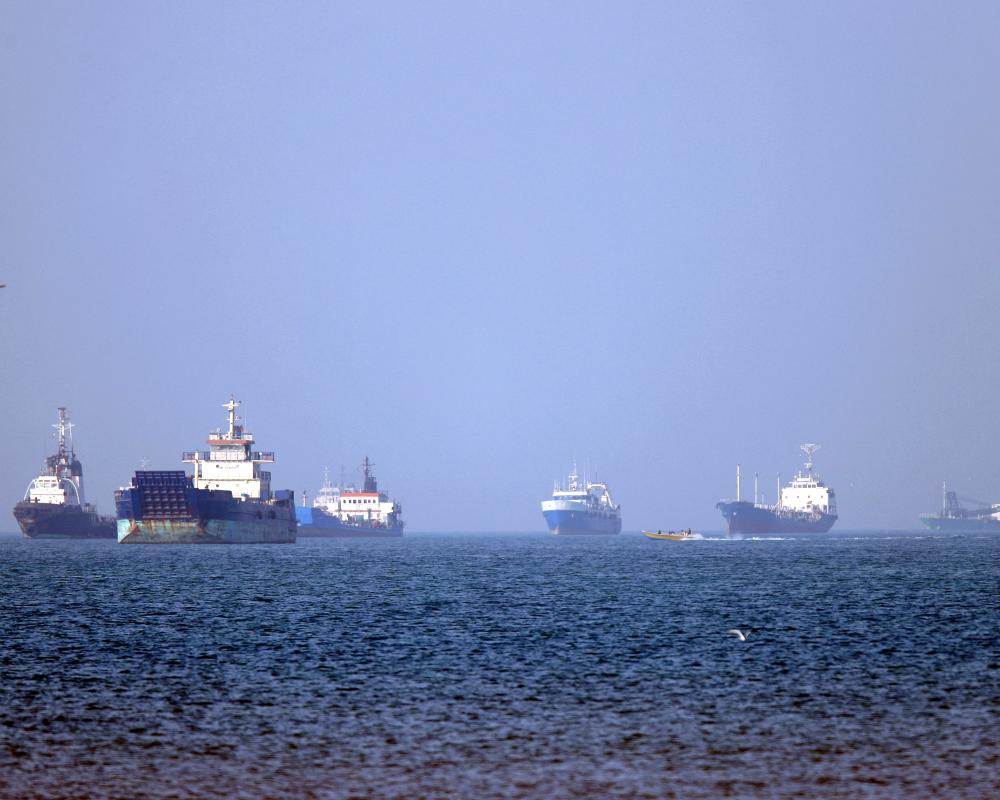
The geopolitical landscape of the Middle East is currently teetering on the edge of a precipice. As of mid-2026, the global focus has shifted sharply toward the Strait of Hormuz, a vital maritime artery that is now the epicenter of a high-stakes military confrontation between the United States and Iran. With President Donald Trump’s launch of “Project Freedom”—a naval initiative designed to escort commercial vessels through the blockaded waterway—the region is seeing a dangerous escalation that threatens to disrupt global energy markets and push the world toward an expanded conflict.
Tensions reached a fever pitch this week when Iranian Parliament Speaker Mohammad Bagher Ghalibaf declared that a “new equation” in the Strait of Hormuz is being solidified. More ominously, he warned the United States that Iran has “not even begun” its response. This rhetorical escalation, paired with fresh reports of drone strikes on the UAE’s Fujairah port and skirmishes between US destroyers and Iranian naval assets, suggests that the relative calm of the April ceasefire has entirely evaporated.
The Strategic Battle for the Strait of Hormuz
The Strait of Hormuz is not merely a geographic chokepoint; it is the jugular vein of the global oil industry. Since the onset of the US-Iranian war following the February 28th strike that claimed the life of Iran’s former supreme leader, the waterway has been effectively paralyzed.
Why Project Freedom Matters
President Trump’s “Project Freedom” aims to break the Iranian blockade by utilizing US naval destroyers to escort merchant ships. However, this move has been met with immediate hostility from Tehran. Iranian military central command has explicitly stated that any US naval vessel approaching the strait will be targeted.
For the shipping industry, the risks are astronomical. Maersk and other major carriers are now caught in the crossfire of a maritime blockade where commercial safety is secondary to geopolitical posturing. While the US claims its operation is purely humanitarian—intended to free trapped cargo ships—Tehran views it as an act of war and a direct violation of regional sovereignty.
The ‘New Equation’ Explained
When Mohammad Bagher Ghalibaf mentions a “new equation,” he is signaling a fundamental shift in how Iran intends to exert power. By integrating drone technology, missile batteries, and asymmetrical naval tactics, Iran is attempting to render the traditional maritime dominance of the US Navy ineffective.
Asymmetrical Warfare: Iran’s reliance on small, fast-attack boats and drone swarms creates a chaotic environment where large, expensive US warships struggle to respond effectively.
Economic Pressure: By keeping the strait closed, Iran is weaponizing global inflation, forcing the international community to acknowledge that the “status quo” is no longer sustainable.
Economic Fallout and Global Market Instability
The volatility in the Strait of Hormuz is having an immediate impact on the global economy. Crude oil prices, which saw a sharp 5.8% jump following the initial announcement of Project Freedom, remain highly sensitive to every headline coming out of the Gulf.
The Threat of Triple-Digit Oil Prices
Economists and global financial institutions are sounding the alarm. IMF Chief Kristalina Georgieva has warned that if the conflict drags into 2027, the world could face a severe economic downturn. If oil prices stabilize above the $125 per barrel threshold, the resulting inflationary pressure could trigger a global recession, severely impacting energy-dependent economies in Europe and Asia.
Regional Ripple Effects
The conflict is not confined to the water. The recent drone attack on the Fujairah oil port in the UAE has brought the war to the doorsteps of US regional allies. The injury of foreign nationals, including citizens from India, has forced countries that were previously attempting to remain neutral to re-evaluate their stance. Saudi Arabia and the UK have issued urgent calls for de-escalation, fearing that a miscalculation in the Gulf could lead to an uncontrollable regional conflagration.
The Diplomatic Impasse: Is There a Path to Peace?
Despite the aggressive posturing, diplomatic channels remain open, though they are increasingly frayed. Iranian Foreign Minister Abbas Araqchi has repeatedly stated that there is “no military solution” to the crisis, pointing toward ongoing mediation efforts by Pakistan.
However, the disconnect between Washington and Tehran remains vast. The US demands a return to the status quo—essentially the free movement of shipping—while Iran insists on a comprehensive deal that includes the lifting of US naval blockades and an end to the war on all fronts, including the ongoing clashes in Lebanon.
The Lebanon Factor
The situation in the Strait of Hormuz is inextricably linked to the conflict in Lebanon. Israel’s continued military operations, which the IDF justifies as “self-defense” against Hezbollah, are seen by Tehran as evidence that the US-brokered ceasefires are being used as a tactical cover for further aggression. As long as the IDF maintains forced displacement orders in southern Lebanon, Iran is likely to continue using the Strait of Hormuz as a retaliatory lever.
Conclusion: A Tense Future
As we look toward the remainder of 2026, the situation in the Middle East remains fluid and dangerous. The warning from Iran that they “have not even begun” should be viewed as a signal that the current skirmishes are merely the opening phase of a much larger, more complex strategic struggle.
The international community is currently watching a high-stakes game of chicken. If the US and Iran cannot find a middle ground, the “new equation” in the Strait of Hormuz may lead to a permanent restructuring of regional power, with catastrophic consequences for global trade and security. For now, the world waits to see if diplomacy can prevail before the next volley of missiles turns a regional crisis into a global catastrophe.