Global Energy Crisis: Is the 2026 Middle East Truce Dead? US and Iran Clash Over the Strait of Hormuz

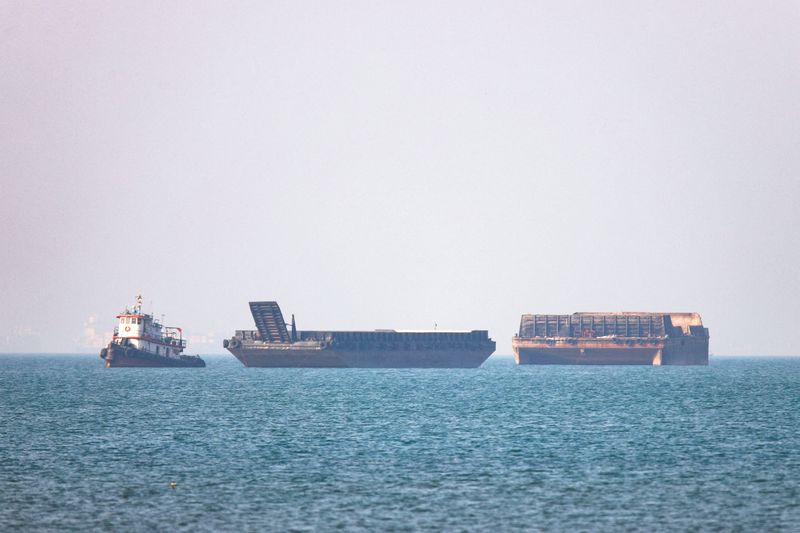
The eyes of the world are fixed on the narrow stretch of water known as the Strait of Hormuz, where a fragile peace is rapidly disintegrating. On Tuesday, May 5, 2026, the international community woke up to reports that the four-week-old ceasefire between the United States and Iran has reached a breaking point. What was supposed to be a period of de-escalation has instead devolved into a high-stakes game of maritime chicken, threatening the very foundations of the global economy.
As the U.S. Navy launches “Project Freedom” to break the Iranian blockade, the risk of a full-scale regional war has never been higher. With oil prices swinging wildly and merchant ships caught in the crossfire, the “truce” now exists only on paper.
The Battle for the World’s Most Vital Chokepoint
The Strait of Hormuz is not just a geographical feature; it is the jugular vein of global energy. Approximately one-fifth of the world’s total oil consumption passes through this narrow waterway daily. Since the conflict began on February 28, 2026, the closure of the strait has sent shockwaves through global markets, affecting everything from gasoline prices in Ohio to fertilizer supplies in Brazil.
“Project Freedom”: The U.S. Strategy to Reopen the Seas
President Donald Trump has doubled down on his administration’s commitment to ensuring “freedom of navigation.” On Monday, the U.S. military confirmed it had destroyed six Iranian small boats, along with several cruise missiles and drones. This operation, dubbed Project Freedom, aims to provide armed escorts for stranded tankers that have been trapped in the Gulf for weeks.
The U.S. Navy’s guided-missile destroyers are now actively engaging Iranian targets to clear a path for merchant vessels. While the Pentagon claims success in escorting the U.S.-flagged Alliance Fairfax out of the Gulf, Tehran has vehemently denied that any such crossing took place, illustrating the deep “fog of war” surrounding the region.
Iran’s “New Maritime Regime”
In response to the U.S. naval presence, the Islamic Revolutionary Guard Corps (IRGC) has effectively declared a “New Maritime Regime.” This involves the extensive use of:
Sea Mines: Strategically placed to deter large tankers.
Swarm Tactics: Utilizing small, fast-attack gunboats to harass larger warships.
Drone Strikes: Precision attacks on infrastructure and merchant shipping.
Iranian Parliament Speaker Mohammad Baqer Qalibaf argued that the U.S. and its allies are the true aggressors. He claimed that the recent American military actions constitute a direct breach of the ceasefire, forcing Iran to defend its territorial waters.
UAE Under Fire: A Dangerous Escalation
One of the most alarming developments in the last 24 hours is the expansion of the conflict into the United Arab Emirates (UAE). For the first time since the April truce began, Iranian missiles and drones targeted critical infrastructure within the UAE, a key American ally.
The Fujairah Port Blaze
The port of Fujairah, located just outside the Strait of Hormuz, is strategically vital because it allows oil to bypass the chokepoint. On Monday, a massive fire broke out at the port following reported Iranian drone strikes. This attack is a clear signal from Tehran: no export route is safe.
The Emirati oil giant ADNOC confirmed that one of its empty tankers was hit, and the UAE government has stated it “reserves the right to respond.” This development threatens to draw the UAE and potentially other Gulf states deeper into a “quagmire,” as warned by Iranian Foreign Minister Abbas Araqchi.
The Economic Fallout: Oil Markets and Beyond
The volatility in the Middle East has immediate and painful consequences for the global consumer. On Monday, oil prices surged by 6% as news of the Fujairah attacks broke. Although prices eased slightly on Tuesday by 1%, the market remains on a knife-edge.
Beyond Oil: Fertilizer and Commodities
While oil dominates the headlines, the Strait of Hormuz is also a critical corridor for fertilizers and other essential commodities. The virtual closure of the waterway since late February has led to:
- Surging Food Prices: As fertilizer exports from the region stall, global agricultural costs are rising.
- Supply Chain Disruptions: Merchant ships, such as the South Korean HMM Namu, have reported mysterious explosions, leading many shipping companies to suspend operations in the region entirely.
- Insurance Hikes: Maritime insurance premiums for ships entering the Gulf have reached prohibitive levels, effectively creating a secondary blockade.
Conflicting Narratives and the Fog of War
Independent verification of events in the Strait remains nearly impossible. The warring sides are engaged in a fierce information war, with each side presenting a different reality.
The U.S. Perspective: The military claims to be targeting “menacing” Iranian assets to protect civilian shipping. They report the destruction of military hardware and the successful passage of merchant ships.
The Iranian Perspective: State media claims that U.S. forces are targeting civilian boats, resulting in casualties. They also claim to have forced a U.S. warship to turn around after firing warning shots.
This discrepancy makes diplomatic intervention extremely difficult, as there is no agreed-upon set of facts on the ground.
Diplomatic Deadlock: Is Peace Still Possible?
Despite the escalating violence, diplomatic channels have not been entirely severed. Pakistan continues to act as a mediator, facilitating the exchange of proposals between Washington and Tehran.
The 14-Point Iranian Proposal
Iran has reportedly submitted a 14-point proposal to end the war. A key component of this plan is the postponement of discussions regarding Iran’s nuclear energy and ballistic missile programs until after a shipping agreement is reached.
However, President Trump has indicated a likely rejection of this proposal. The U.S. position remains firm:
Nuclear Disarmament: The U.S. wants the complete removal of Iran’s enriched uranium stockpiles.
End to Proxies: The U.S. demands an end to Iranian support for groups like Hamas and Hezbollah.
Security of the Strait: The “complete, immediate, and safe opening” of the Strait of Hormuz is a non-negotiable condition for any lasting ceasefire.
Analysis: The High Stakes of 2026
As we move further into 2026, the confrontation in the Middle East represents the most significant challenge to global stability in decades. The conflict has moved beyond a simple regional spat into a systemic crisis.
The U.S. intelligence community suggests that while the war has roiled the economy, it has had “limited damage” on Iran’s actual nuclear infrastructure. This suggests that the military campaign may continue to intensify as the U.S. seeks more “decisive” results. Meanwhile, the Iranian leadership, now including Mojtaba Khamenei, appears prepared for a prolonged war of attrition.
Conclusion: A World on Edge
The fragile truce of April 2026 is currently hanging by a thread. The clash for control of the Strait of Hormuz is not just about maritime borders; it is a fight for global influence, energy security, and political survival.
If “Project Freedom” succeeds in reopening the strait, we may see a cooling of oil prices and a return to the negotiating table. However, if the attacks on the UAE and merchant shipping continue, the Middle East—and the global economy—may be headed for a summer of unprecedented darkness.
The coming days will be decisive. Will the mediation efforts of Pakistan bear fruit, or will the “quagmire” swallow the remaining hopes for peace? For now, the world waits, watches, and pays the price at the pump.