Profit Over Preservation: The High Court Battle Over Belfast’s Historic Queen Street Site

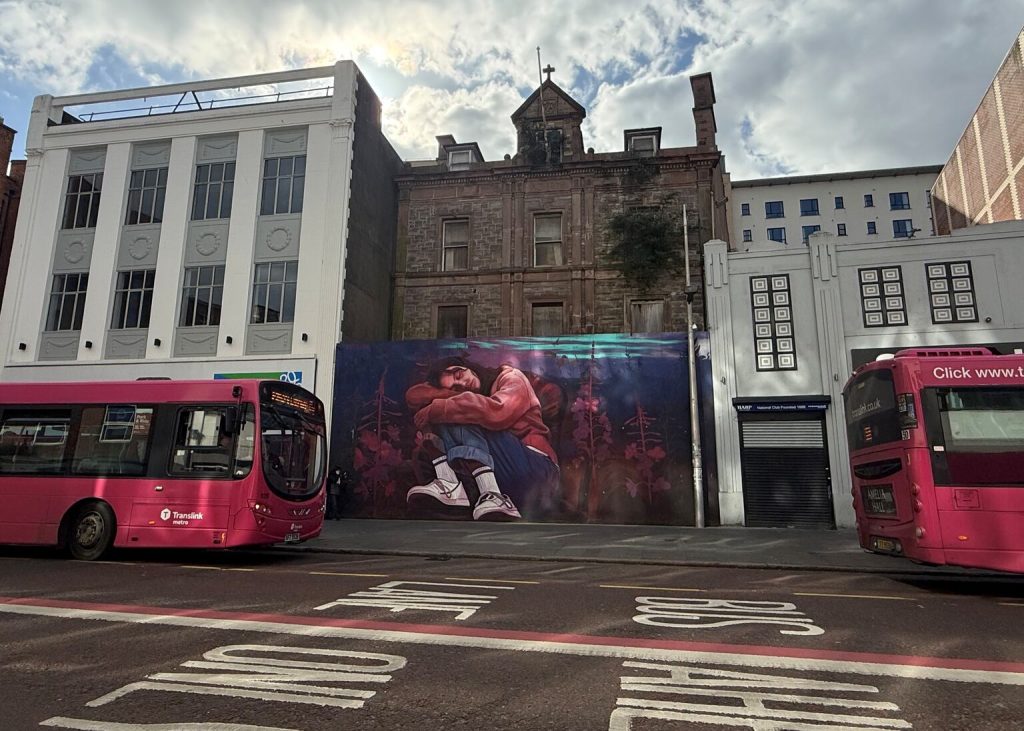
The ongoing tension between urban regeneration and the preservation of historic architecture has reached a boiling point in Northern Ireland. As of May 2026, the High Court in Belfast is once again the stage for a high-stakes legal battle concerning the future of 21 Queen Street. The site, once a children’s hospital and later an RUC barracks, stands as a Grade B1 listed relic of 19th-century history. Now, it faces the prospect of partial demolition to make way for a 74-bedroom luxury hotel—a move that heritage campaigners argue prioritizes developer profit over the integrity of Belfast’s built environment.
The Heart of the Dispute: Heritage vs. Hospitality
The Ulster Architectural Heritage Society (UAHS) has launched a robust judicial review against Belfast City Council’s decision to grant planning permission for the redevelopment. The crux of their argument is that the council’s approval process was “unlawful, unreasonable, and irrational.”
Legal representatives for the UAHS, led by Ronan Lavery KC, have argued that demolition of the historic rear structures—which link to College Court—should be viewed as an absolute last resort. Instead, they contend that the developer, Big Top Productions, has bypassed more sustainable, heritage-conscious options simply because they were less economically lucrative.
A History of Vacancy and Decay
The Grade B1 listed building has sat largely vacant since the year 2000. Over the past two decades, its condition has deteriorated, landing it firmly on the ‘buildings at risk’ register. The council’s legal team maintains that the current proposal is the most viable path to saving the main front section of the building. They argue that without the injection of capital from a major redevelopment, the entire structure could be lost to structural failure and long-term decay.
Why This Case Matters for Belfast’s Urban Strategy
This legal challenge is more than just a dispute over a single building; it is a litmus test for how Belfast manages its historic assets in a post-pandemic economy. As the city continues to expand its tourism and hospitality sectors, pressure on central land grows.
Economic Viability vs. Cultural Value: The UAHS suggests that a smaller, boutique hotel could have preserved the site’s footprint without necessitating the demolition of the rear structures.
The “Precedent” Problem: Critics fear that allowing “profit-first” development sets a dangerous precedent, where developers might intentionally allow listed buildings to decay to justify demolition for larger, more profitable schemes.
- Public Access to History: As Mr. Lavery noted in court, these buildings represent tangible history—not “virtual reality” experiences. Replacing them with generic luxury suites risks eroding the unique character that defines Belfast city centre.
The Planning Policy Gap
Under current planning regulations, demolition of a listed building requires “exceptional circumstances.” The campaign group argues that these circumstances simply do not exist in this case. They claim the council failed to properly explore alternative designs that would have retained the full structure, thereby violating the spirit of heritage protection policies.
The Development Timeline: A Rollercoaster of Approvals
The saga of 21 Queen Street has been marked by repeated legal interventions. The initial approval for the project was previously quashed by the High Court following similar objections. Despite this, the Council granted fresh planning permission in late 2024 for the nine-storey hotel, which includes a restaurant, bar, and ancillary facilities.
This latest decision has prompted the current judicial review, with the UAHS seeking an order to halt all demolition work until the court reaches a final determination. The legal outcome will likely dictate how future planning committees weigh the financial interests of developers against the preservation of Grade B1 listed sites.
The Broader Context of Belfast’s Built Environment
Belfast is currently undergoing a significant shift in its urban landscape. From student housing schemes replacing “ugliest buildings” to the conversion of the Scottish Mutual Building into a luxury hotel, the city is constantly negotiating its past and future.
However, the Queen Street case highlights a growing frustration among preservationists. They argue that while urban revitalization is necessary, it shouldn’t come at the cost of erasing the architectural markers of the 19th century. The debate centers on whether a building’s “economic viability” is the only metric of success, or if “social and cultural capital” should carry equal weight in the planning committee’s boardroom.
Key Considerations for the Court
As the High Court proceedings continue, the judge will be tasked with answering several complex questions:
- Did the Council act irrationally? Was the evidence regarding structural decay sufficient to justify the demolition of the rear sections?
- Were alternatives truly explored? Did the planning committee conduct a rigorous enough search for development models that didn’t require demolition?
- Is the “luxury hotel” model the only way forward? Does the economic necessity of a 74-bedroom hotel override the heritage protections afforded to a Grade B1 structure?
Conclusion: A City at a Crossroads
The battle for 21 Queen Street is a microcosm of a much larger global struggle. As cities strive to modernize, the tension between the “new” and the “old” becomes increasingly fraught. Whether the court sides with the developers or the heritage advocates, the decision will serve as a landmark ruling for Belfast’s planning future.
For now, the site remains in limbo, a silent witness to the legal arguments taking place just streets away. Whatever the outcome, the case has successfully sparked a public conversation about what kind of city Belfast wants to be: one that prioritizes the bottom line, or one that honors its architectural legacy.