West Belfast Residents Outraged as ‘Disgraceful’ Anti-Social Driving Plagues Colin Area

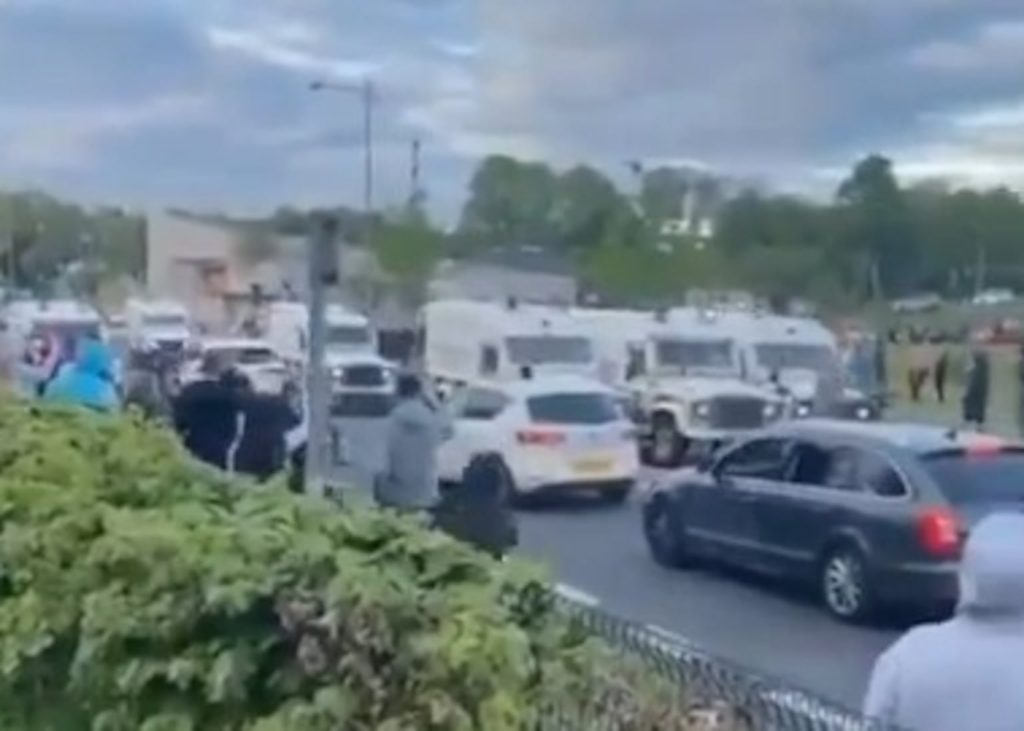
The streets of West Belfast, specifically the Colin area, were recently transformed into a theatre of chaos as a planned “cruise and diffing” event spiraled out of control. Despite prior warnings from the Police Service of Northern Ireland (PSNI), hundreds of spectators gathered to watch drivers perform dangerous stunts, leading to widespread condemnation from local political representatives and frustrated residents.
As we move through 2026, the issue of illegal car meets and anti-social driving continues to be a flashpoint for community tensions. This latest incident on the Stewartstown Road has reignited a fierce debate regarding public safety, the efficacy of preventative policing, and the urgent need for a long-term strategy to tackle reckless behavior on public roads.
The Anatomy of the Chaos on Stewartstown Road
The event, which had been circulating on social media platforms for days, saw a massive influx of vehicles and hundreds of onlookers descending upon the Colin area. What began as a gathering quickly devolved into what witnesses described as a terrifying display of reckless driving.
Video footage captured the scenes in grim detail: vehicles spinning in circles—commonly known as “doing donuts”—while motorcycles wove dangerously through the crowd at high speeds. The atmosphere was reportedly chaotic, with the safety of pedestrians and local residents completely disregarded.
For the families living in the vicinity, the noise and the blatant disregard for traffic laws were not just a nuisance; they were a significant threat to life. The thin line between a car meet and an accident was blurred throughout the night, prompting an immediate outcry from community leaders.
MLA Danny Baker: A Call for Accountability
Sinn Féin MLA Danny Baker has been at the forefront of the criticism, labeling the scenes as “absolutely chaotic” and “nothing short of a disgrace.” Baker’s reaction highlights a growing disconnect between the community’s expectations for safety and the police’s ability to manage pre-planned disruptive events.
Key Points of Concern Raised by the MLA:
Preventative Failure: Baker asserts that the police were informed of the event hours before it began, yet failed to deploy sufficient preventative measures to block the cavalcade of cars from entering the area.
Community Frustration: Residents feel “completely let down” by the lack of timely intervention, leading to a surge in anger directed at both the participants and the authorities.
Demand for Action: The MLA has formally requested an urgent meeting with the PSNI to discuss why the situation was allowed to escalate to the point of danger before enforcement began.
“Lives were put at risk as cars freely spun around the road,” Baker stated. His demand for swift action and apprehension of those involved is a sentiment shared by many in the constituency who are tired of seeing their neighborhood used as an illegal racetrack.
The PSNI’s Role: Prevention vs. Reaction
The PSNI had issued a public warning on the Monday preceding the event, explicitly stating that “reckless driving will not be tolerated” and that any such behavior would be met with “swift action and enforcement.” However, when the crowds arrived, the initial response was perceived as insufficient.
By the time multiple PSNI land rovers arrived to disperse the crowds, the damage to the community’s sense of security had already been done. Critics argue that issuing a warning on social media is insufficient if there is no physical deterrent on the ground to stop these events from starting in the first place.
This incident raises broader questions about how law enforcement handles the rise of viral, social-media-organized events. In 2026, where digital coordination allows for rapid mobilization, traditional policing models may need to evolve to address these “flash mob” style car meets more effectively.
The Impact on the Colin Community
The Colin area has seen significant investment and development in recent years, making the presence of such anti-social behavior particularly galling for residents. Beyond the immediate danger, there is the long-term impact on the quality of life.
- Noise Pollution: The constant revving and screeching of tires disrupt the peace of residential neighborhoods.
- Infrastructure Damage: Frequent “diffing” leads to accelerated wear and tear on road surfaces, which ultimately costs the taxpayer.
- Public Fear: The presence of large, unruly crowds creates an environment where local families feel unsafe to walk or drive in their own neighborhood.
The frustration expressed by the community is rooted in the belief that these events are not victimless crimes. Every car spinning on a public road is a potential tragedy waiting to happen.
Looking Ahead: A Path Toward Safer Streets
To prevent future occurrences of such disgraceful anti-social driving, a multi-faceted approach is required. It is not enough for politicians to condemn the behavior; there must be a tangible plan to mitigate the risks.
Potential Solutions Include:
Enhanced Intelligence Gathering: Strengthening the monitoring of social media to identify planned events earlier.
Physical Deterrents: Implementing traffic-calming measures or temporary road closures in known “hot spots” when intelligence suggests a gathering.
Inter-Agency Cooperation: Working with local councils to provide alternative, legal venues for car enthusiasts to gather, thereby separating those who want to appreciate cars from those who want to break the law.
- Rigorous Enforcement: Ensuring that those identified in footage receive heavy penalties, including the seizure of vehicles, to act as a genuine deterrent.
Conclusion
The events on the Stewartstown Road serve as a stark reminder of the challenges posed by anti-social driving in modern urban environments. While the condemnation from MLA Danny Baker and other local representatives is a necessary first step, the community of West Belfast is calling for more than just words.
As we look toward the remainder of 2026, the pressure will be on the PSNI to prove that they can protect the public from these dangerous displays. Safety, accountability, and proactive policing must become the standard to ensure that the streets of the Colin area remain a place for residents to live, work, and play, rather than a playground for reckless drivers.