Redefining the Red Carpet: How Sinéad Burke Transformed Accessibility at the 2026 Met Gala

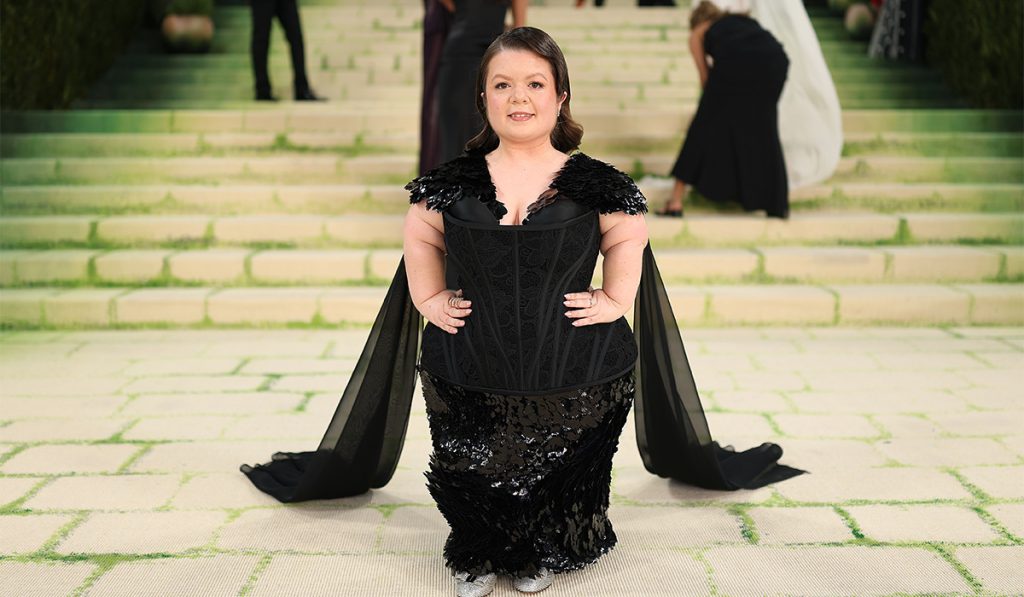
The 2026 Met Gala was more than just a parade of high-fashion couture; it marked a historic turning point for inclusivity in the global fashion industry. While celebrities and designers dazzled on the steps of the Metropolitan Museum of Art, one Irish visionary was working behind the scenes to ensure the “biggest night in fashion” lived up to its potential as an accessible space for all.
Sinéad Burke, the renowned Irish disability activist and founder of Tilting the Lens, played a pivotal role in reshaping the logistics of the event. Through her advocacy and partnership with the Costume Institute, she proved that accessibility is not a hurdle to design, but a fundamental requirement for true cultural relevance.
A New Era of Inclusivity at the Met Gala
For decades, the physical layout of the Metropolitan Museum of Art—specifically its iconic, sweeping staircase—presented a significant barrier for disabled guests, media, and talent. Historically, this meant that the red carpet experience was effectively closed off to a large portion of the population. Sinéad Burke’s collaboration with Vogue and the Met Museum dismantled these outdated barriers in 2026.
Burke’s organization, Tilting the Lens, worked extensively to audit the space and implement tangible solutions. The primary goal was to ensure that equality was not just an ideal, but a structural reality.
Key Accessibility Milestones
The 2026 event introduced several critical changes that set a new standard for global red-carpet events:
The Step-Free Entrance: A secondary, purpose-built route at 81st Street was designed to be as aesthetically grand and welcoming as the traditional stairs.
Media Accessibility: For the first time, disability-focused media outlets were granted full access to the red carpet and the preview, ensuring that diverse perspectives were present to document the event.
Systemic Change: By creating a route that is “aesthetically pleasing and engaging,” Burke ensured that disabled attendees were not sidelined or forced through service entrances, but rather celebrated as part of the main event.
Sinéad Burke: The Irish Powerhouse on the Committee
Sinéad Burke’s influence extended far beyond the structural changes. In 2026, she served on the Costume Institute Benefit Host Committee, standing alongside industry titans like Anna Wintour, Beyoncé, Nicole Kidman, and Venus Williams. Her presence on the committee highlights the shifting priorities of the fashion world, where disability representation is finally being recognized as an essential component of creative leadership.
Burke, who hails from Navan, has long been a voice for “designing for everyone.” Her journey from a fashion-obsessed student to a global consultant for the world’s most exclusive gala is a testament to her tenacity.
From “Word-Vomiting” to the Host Committee
Reflecting on her relationship with Anna Wintour, Burke famously shared an anecdote about their first meeting. After nervously introducing herself and “word-vomiting” about Wintour’s career, many might have expected a cold shoulder. Instead, the interaction blossomed into a professional relationship that has now fundamentally altered the landscape of the Met Gala. This journey underscores a simple truth: when the fashion industry listens to disabled voices, the entire culture benefits.
Fashion as a Statement: The Christian Siriano Masterpiece
While her work as an activist took center stage, Burke’s red-carpet appearance was a masterclass in elegance. Dressed in a bespoke Christian Siriano gown, she commanded the room with a look that was both architectural and timeless.
The ensemble featured a figure-hugging corseted bodice adorned with intricate black embellishments. The striking skirt and chiffon draping—which she masterfully manipulated for photographers—created a dramatic silhouette. Siriano, a designer known for his commitment to body inclusivity, noted that it was a “true honor” to dress Burke, further cementing the synergy between the activist’s mission and the designer’s craft.
Why This Matters for the Future of Fashion
The 2026 Met Gala was a watershed moment. By integrating accessibility into the core planning of the event, the organizers have effectively ended the “self-fulfilling prophecy” that disabled talent cannot participate in high-fashion events.
The Ripple Effect
Brand Sponsorships: When disabled talent has access to the red carpet, fashion brands are more likely to sponsor their attendance, creating a cycle of inclusion.
Representation: Seeing leaders like Burke on the Host Committee invites a broader demographic to participate in the conversation about what constitutes “Costume Art.”
Design Philosophy: The success of the 2026 event proves that inclusive design is not “ugly” or “clinical.” It can be just as glamorous, high-end, and sophisticated as any other aspect of the Met Gala.
Conclusion: A Legacy of Inclusion
Sinéad Burke’s contribution to the 2026 Met Gala is not just a win for the disability community; it is a win for the entire fashion industry. By challenging the status quo and demanding that spaces be designed for the reality of human diversity, she has ensured that the Met Gala remains relevant for years to come.
As we look back on the 2026 event, the memory won’t just be of the feathers, the sequins, or the theme. It will be the memory of a night where the gates were truly opened, and the red carpet finally felt like it belonged to everyone.