Tragic MMA-Style Kick Case: The Legal and Human Cost of a Fatal Encounter

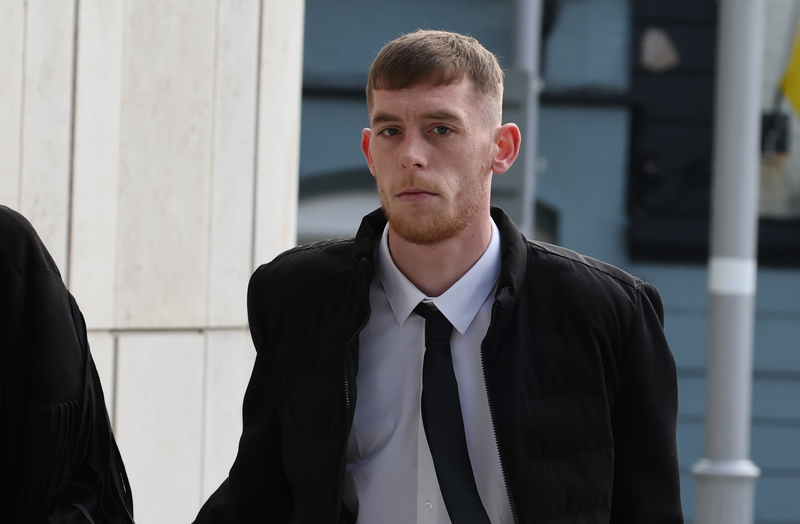
The judicial system often grapples with cases where a split-second decision leaves a permanent scar on society. As of 2026, the case of Joshua Rush, the 26-year-old man sentenced for the manslaughter of 69-year-old Charles McCaughley, remains a sobering reminder of how unprovoked violence can lead to devastating, irreversible consequences. This incident, which occurred on the streets of Dublin, highlights the lethal potential of physical altercations and the rigorous legal scrutiny applied to cases involving fatal head injuries caused by falls.
The Incident: An Unprovoked Confrontation
In June 2021, the quiet routine of Charles McCaughley, a retired glazier, was permanently shattered. Witnesses recounted that Mr. McCaughley, who had been described as being in “good form” after purchasing fish and chips, was walking along Fairview Strand. Without warning, he was confronted by three men.
According to witness testimony, Joshua Rush initiated an MMA-style back spin kick against the pensioner. The force of the blow caused Mr. McCaughley to fall backward, striking his head on the pavement. Despite the immediate assistance of bystanders, the trauma to his brain proved fatal, and he passed away weeks later on June 26, 2021.
Legal Proceedings and Sentencing
When the case reached the Dublin Circuit Criminal Court, the legal battle focused on the nature of the attack and the intent behind the violence. Judge Martina Baxter presided over the case, delivering a verdict that balanced the severity of the act with the mitigating factors presented by the defense.
The Court’s Verdict
Judge Baxter rejected the defense’s attempt to classify the incident as a typical “one-punch” assault. Instead, she emphasized that the deliberate nature of the kick against a defenseless individual elevated the gravity of the crime. The judge specifically highlighted the “callousness” of the defendant in fleeing the scene rather than rendering aid to the victim.
Ultimately, Rush was sentenced to six-and-a-half years in prison, with the final 18 months suspended. This sentence reflects the court’s commitment to punishing reckless violence while acknowledging the defendant’s lack of previous convictions and his expressed remorse.
Mitigating Factors
Several elements influenced the final sentencing decision:
Genuine Remorse: The court reviewed a letter of apology from Rush, in which he acknowledged the devastation he caused to both the victim’s family and his own.
The Victim’s Family: In a display of profound grace, the victim’s surviving sister expressed that she did not wish to see anyone jailed for her brother’s death, though the court maintained that the law must reflect the seriousness of the offense.
Personal Circumstances: Defense counsel highlighted Rush’s difficult upbringing, his diagnosis of ADHD, and his efforts to distance himself from his former social circle.
The Science of Fatal Falls
Medical experts and forensic pathologists often categorize falls—whether accidental or the result of an assault—as a leading cause of traumatic injury. As noted in research on fatal head injuries, the mechanics of falling backward onto a hard surface often result in severe intracranial damage that is not always immediately apparent.
In the case of Mr. McCaughley, the post-mortem examination confirmed that a traumatic brain injury was the primary cause of death. The World Health Organization (WHO) classifies falls as significant events that can result in fatal outcomes, and this case serves as a tragic validation of how a single, disproportionate act of force can turn a public street into a site of a fatal accident.
Analyzing the “MMA-Style” Assault
The inclusion of “MMA-style” techniques in street confrontations has become a point of concern for law enforcement globally. Mixed Martial Arts (MMA) involves specialized training for combat, and when these techniques are deployed against an unsuspecting or untrained civilian, the potential for disproportionate harm increases exponentially.
The court noted that Rush’s actions were “out of character” for someone described by his defense as a “quiet, shy, non-aggressive” individual. However, the legal system ultimately prioritizes the actions taken over the character* of the accused when an act of violence results in death. This distinction is crucial for understanding why even first-time offenders face significant custodial sentences for manslaughter.
Lessons for Society and Justice
The tragedy in Fairview Strand acts as a cautionary tale regarding the fragility of life and the legal repercussions of impulsive behavior. The court’s rejection of the “self-defense” argument—despite being initially accepted by gardaí—underscores the complexity of evaluating volatile street encounters.
Key Takeaways:
- Responsibility: The act of leaving an injured person on the ground is viewed by the courts as a significant aggravating factor.
- Proportionality: Physical responses to verbal altercations must be proportional; an “MMA-style” kick is inherently recognized as a weaponized, dangerous move.
- Human Impact: The loss of life affects not just the victim, but ripples through families and communities, leaving a legacy of grief that no prison sentence can truly mend.
Conclusion
As of 2026, the case of Joshua Rush continues to be studied as a benchmark for how courts handle manslaughter involving assault. While the legal chapter is closed, the underlying themes of accountability, the dangers of physical aggression, and the importance of empathy remain highly relevant. Society must continue to advocate for de-escalation and recognize that every interaction, no matter how minor it may seem in the moment, carries the potential to change lives forever.