Vandalism in Belfast: First King Charles III Postbox Targeted Within Hours of Unveiling

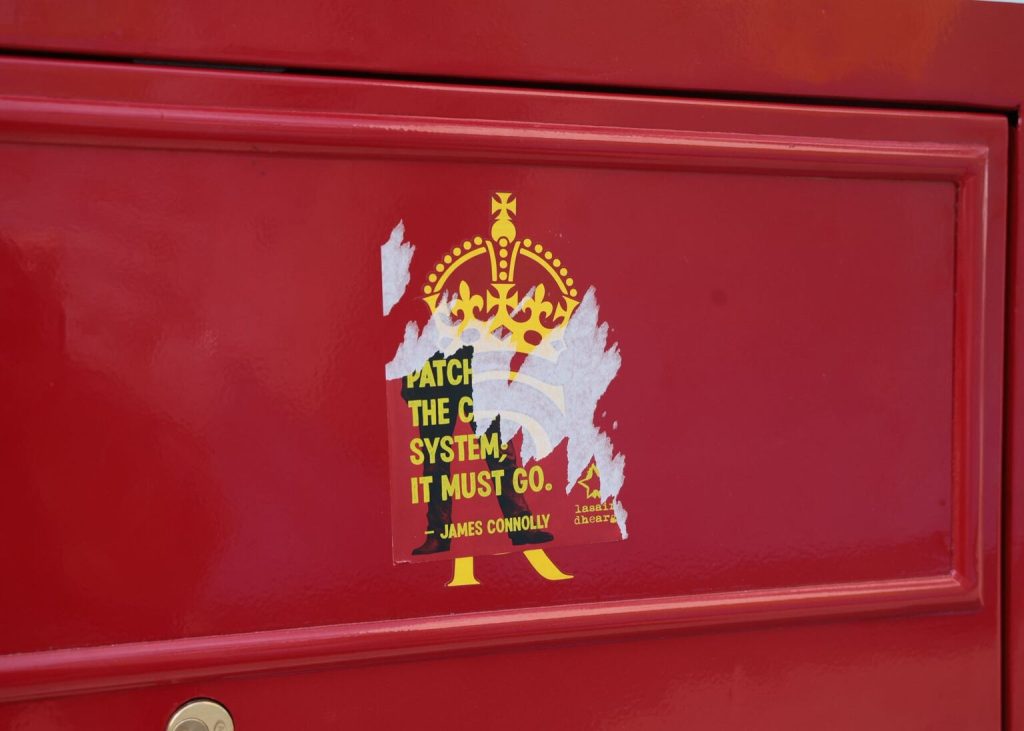
The landscape of Northern Ireland has long been a canvas for political expression, where symbols of state and sovereignty often carry significant weight. In May 2026, this reality was once again underscored when the first postbox in Northern Ireland bearing the King Charles III cypher was vandalized less than 24 hours after its official installation. The incident, which occurred in Belfast, has sparked a fresh debate regarding identity, tolerance, and the visibility of British royal symbols in a divided society.
The Unveiling and Rapid Defacement
The postbox, located on York Street in Belfast, was intended to be a routine infrastructure upgrade. It was part of a broader, modern roll-out of 600 solar-powered parcel postboxes across the United Kingdom. During the unveiling ceremony, local dignitaries, including the Lord Lieutenant of Belfast, Dame Fionnuala Jay-O’Boyle, and children from the Belfast Royal Academy, gathered to celebrate what was meant to be a symbol of connectivity and service.
However, the celebratory mood was short-lived. By the following morning, the surface of the iconic red pillar box had been covered with stickers associated with Lasair Dhearg, a republican-socialist organization. The swift nature of the vandalism—occurring within a single day—highlights the volatility of political symbols in Northern Ireland and the ease with which public property becomes a focal point for ideological protest.
Royal Mail Response and Restoration
A spokesperson for the Royal Mail expressed immediate disappointment regarding the incident. The organization, which manages thousands of postboxes across the UK, has a long-standing policy of maintaining its assets to ensure the public can rely on its services.
“We were disappointed to see that the new parcel postbox on York Street has been defaced,” the Royal Mail representative stated. “We will arrange for it to be restored as soon as possible.”
While the stickers were largely removed shortly after the incident, the event serves as a reminder of the logistical challenges utility providers face when operating in politically charged environments. For the Royal Mail, the priority remains the functionality of the box, but for the community, the box has become a lightning rod for broader tensions that have simmered for decades.
The Role of Lasair Dhearg
The group claiming responsibility, Lasair Dhearg (Red Flame), is a far-left republican-socialist organization that has been active in Belfast since 2018. Their political platform is rooted in the pursuit of a 32-county socialist republic, and they are known for their confrontational approach to the symbols of the British state.
This incident is not an isolated one for the group. Earlier in 2026, Lasair Dhearg claimed responsibility for pouring red paint over a statue of Queen Victoria at the Royal Victoria Hospital. By targeting the King Charles III postbox, the group is clearly signaling that the transition of the monarchy—from the late Queen Elizabeth II to King Charles III—does not alter their fundamental opposition to British sovereignty in Northern Ireland.
Political Fallout and Community Reactions
The vandalism has drawn sharp criticism from unionist representatives, who view the act as an assault on the culture and identity of the unionist community. TUV representative Samuel Morrison did not mince words when discussing the implications of the act.
“I think it’s indicative of what the treatment unionists can expect, and what their culture can expect, in a new Ireland,” Morrison remarked. He argued that the intolerance shown toward a simple postbox suggests a lack of room for British identity in the vision of an “agreed Ireland” propagated by certain republican factions.
Morrison also pointed to what he called the “hypocrisy” of the situation, noting that while royal symbols like postboxes are targeted, the British currency remains widely used by people across the political spectrum in Belfast. This highlight on the “selective” nature of protests suggests that the debate is less about the practicalities of the postbox and more about the symbolic dominance of the British state in a territory where identity is deeply contested.
The Significance of the King Charles III Cypher
The installation of the King’s cypher is a historic moment for the Royal Mail. Following the coronation of King Charles III, the process of updating signage and infrastructure across the UK has been a slow, methodical transition. Unlike in Scotland, where postboxes often feature a representation of the Scottish Crown, the boxes in Northern Ireland generally follow the standard UK design.
For many, these boxes are pieces of British heritage. The fact that the first box to feature the new monarch’s cypher in Northern Ireland was met with such immediate hostility underscores how symbols of the monarchy remain a flashpoint in the regional political discourse.
Looking Ahead: The Future of Public Symbols
As Northern Ireland continues to navigate its complex political future, the visibility of state symbols will likely remain a contentious issue. The Royal Mail’s commitment to restoring the box confirms that they intend to maintain their presence throughout the region, regardless of the political climate.
However, the incident raises several questions for the future:
- Security of Public Assets: Will the Royal Mail need to increase surveillance or security for high-profile installations?
- Political Dialogue: Can a common ground be found where public infrastructure is not viewed through a purely sectarian or nationalist lens?
- Community Tolerance: Does the vandalism reflect a wider breakdown in community relations, or is it the work of a localized, radicalized minority?
As of now, the PSNI has been contacted, and the investigation into the vandalism continues. While the stickers have been scrubbed away, the underlying sentiment that prompted the act remains, leaving the residents of York Street to navigate yet another chapter in the long-standing contestation of space and symbol in Belfast.
The incident serves as a stark reminder that in Northern Ireland, even the most mundane elements of public life—a parcel drop-off point, a pillar box, or a street sign—are rarely just “things.” They are history, they are identity, and they are the front lines of a political narrative that is still very much in flux.