King Charles III in Bermuda: A Historic 2026 Encounter with Heritage, Healing, and the Gombey Spirit

In the spring of 2026, the turquoise waters and pastel-colored streets of Bermuda served as the backdrop for one of the most significant royal visits in recent memory. As King Charles III touched down in the British Overseas Territory, the atmosphere was a complex tapestry of celebratory pomp and somber reflection. This was not merely a ceremonial stopover; it was a profound journey into the heart of the island’s dual identity—one defined by its breathtaking natural beauty and its harrowing history of the transatlantic slave trade.
The 2026 tour marked a pivotal moment for the monarchy as it continues to navigate its relationship with the Commonwealth and the legacies of the past. From the historic alleys of St. George’s to the modern conservation efforts on the island’s shores, the King’s visit was designed to honor the resilience of the Bermudian people while confronting the “darker moments” that shaped the Atlantic world.
A Ceremonial Greeting in the Heart of St. George’s
The royal visit commenced in St. George’s, the former capital of Bermuda and a UNESCO World Heritage site. The greeting was a masterclass in military precision and island warmth. Thousands of well-wishers lined the cobblestone streets, waving the Union Jack alongside the Bermudian flag, as the King was met with a traditional ceremonial welcome.
Despite the high-level security and formal protocols, the interaction felt remarkably personal. The King, known for his interest in local architecture and community cohesion, took time to acknowledge the “whirlwind” nature of the trip, expressing a deep desire to see the “real Bermuda” beyond the tourist brochures. The 2026 visit is being hailed by historians as a “bridge-building exercise,” aimed at strengthening ties between the Crown and its territories through transparency and mutual respect.
Confronting the Past: Slavery Artefacts at Ordnance House
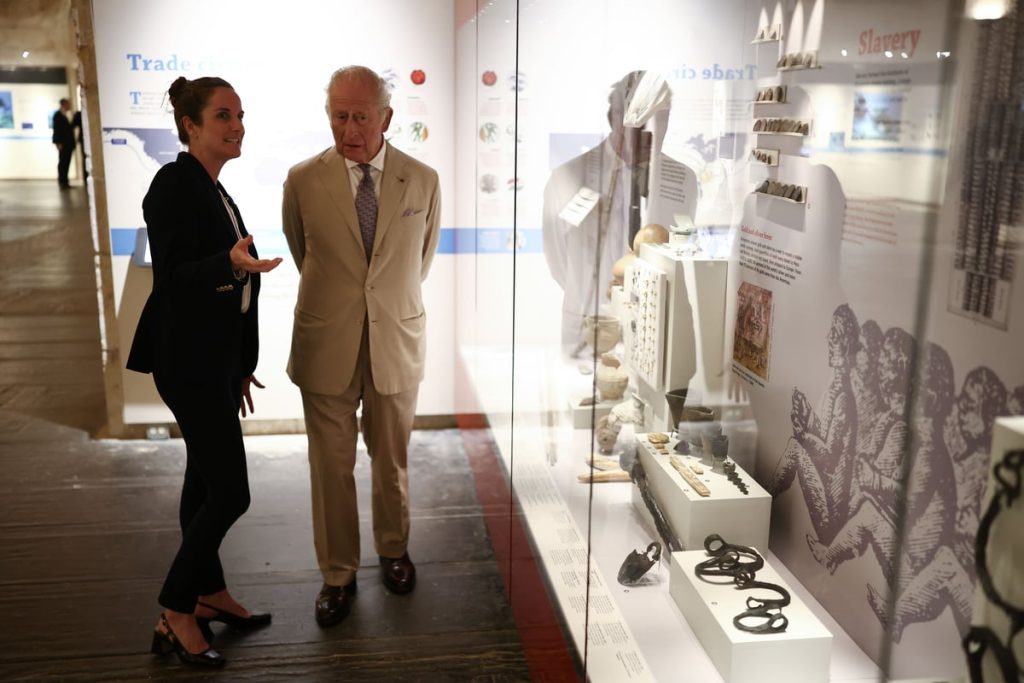
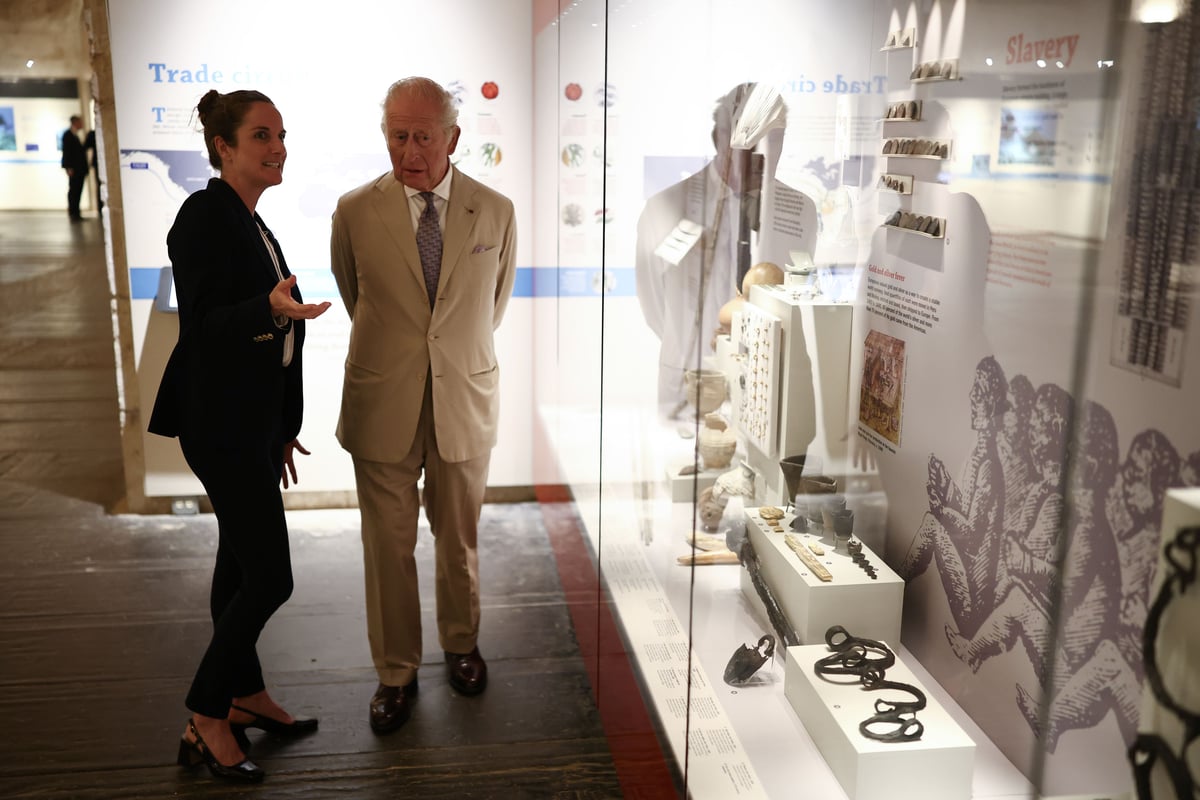
Perhaps the most poignant segment of the tour took place at the 1850 Ordnance House, a significant structure within the National Museum of Bermuda. Here, the King transitioned from the bright sunshine of the square into the quiet, reflective halls of an exhibition dedicated to the island’s history of trade, conquest, and enslavement.
Accompanied by museum curators and local historians, Charles viewed a stark display that did not shy away from the brutality of the past. The exhibits included:
Neck irons from the 1500s: Heavy, rusted remnants of a system designed to strip humans of their dignity.
Illustrations of slave ships: Drawn images showing shackled men crowded into the hulls of vessels, a visual testament to the horrors of the Middle Passage.
Trade ledgers: Documents that recorded human lives as mere commodities, highlighting the economic machinery of the era.
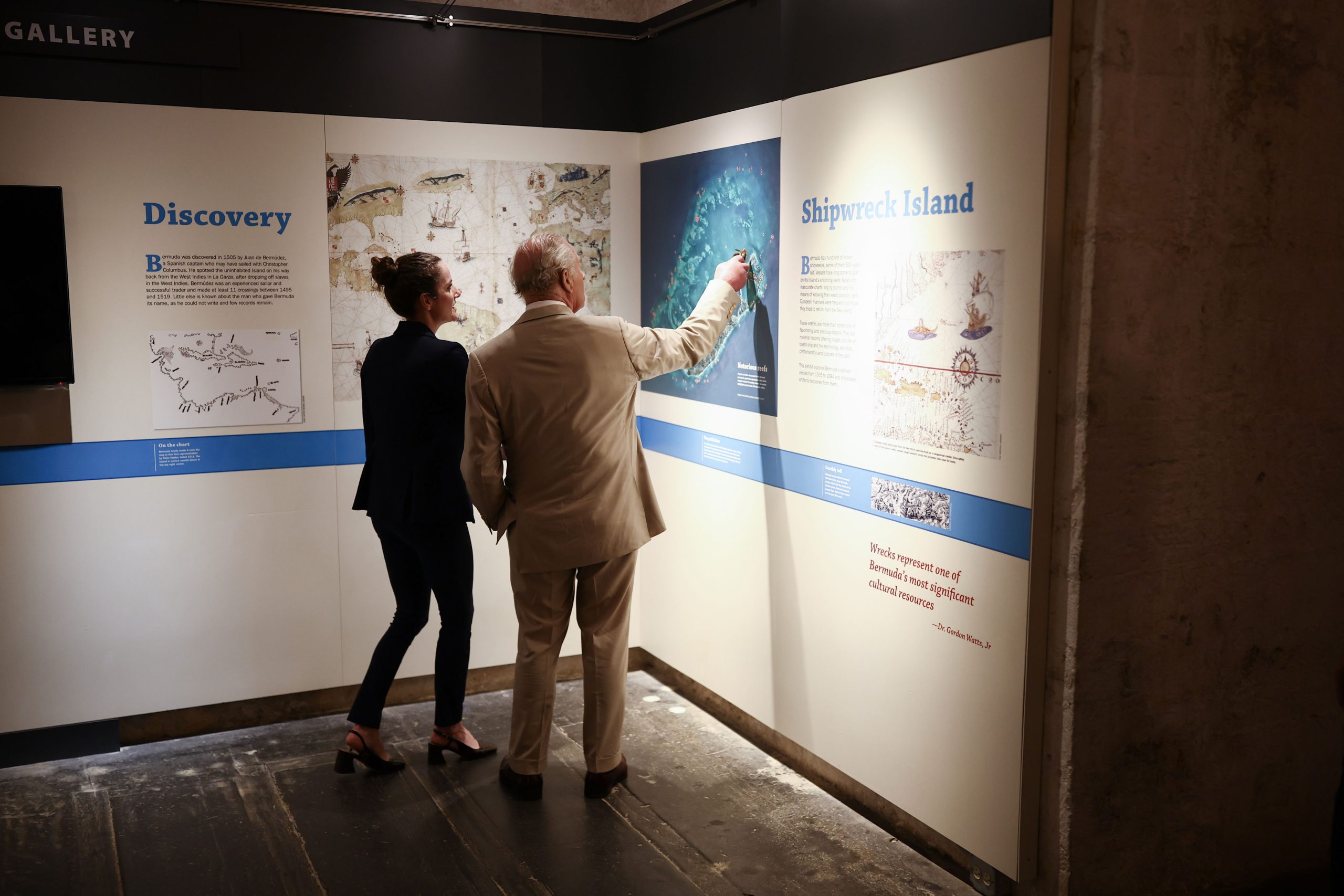
The King’s decision to spend a significant portion of his visit here was seen as a deliberate act of historical acknowledgement. In 2026, the conversation surrounding the British Empire’s role in slavery has reached a critical mass, and the King’s engagement with these “stark displays” suggests a monarchy willing to witness the evidence of colonial trauma firsthand.
The Gombey Tradition: A Dance of Resistance and Resilience
If the museum visit was a moment of silence, the Gombey dance performance was a riot of sound and color. The King watched with visible fascination as members of the National Gombey Dance Troupe performed a tradition that is the literal heartbeat of Bermuda.
The Gombey tradition is more than just a dance; it is a living archive of African, Caribbean, Native American, and British influences. Historically, this expression of culture was strictly restricted. During the era of slavery, enslaved people were often only permitted to perform these dances on Christmas and New Year’s Day.
The Symbolism of the Gombey
Irwin Trott, a prominent spokesman for the Bermudan Gombey troops, shared the profound meaning behind the regalia with the King:
- Neon-Colored Outfits: Representing the vibrancy and refusal to be dimmed by oppression.
- Tassels and Mirrors: Often used to ward off evil spirits and reflect the light of freedom.
- Ostrich Feather Plumes: The tall, pointed headgear signifies the stature and pride of the dancers.
- The Masks: Historically allowed the dancers to perform without being identified by their oppressors, providing a sense of anonymity and safety.
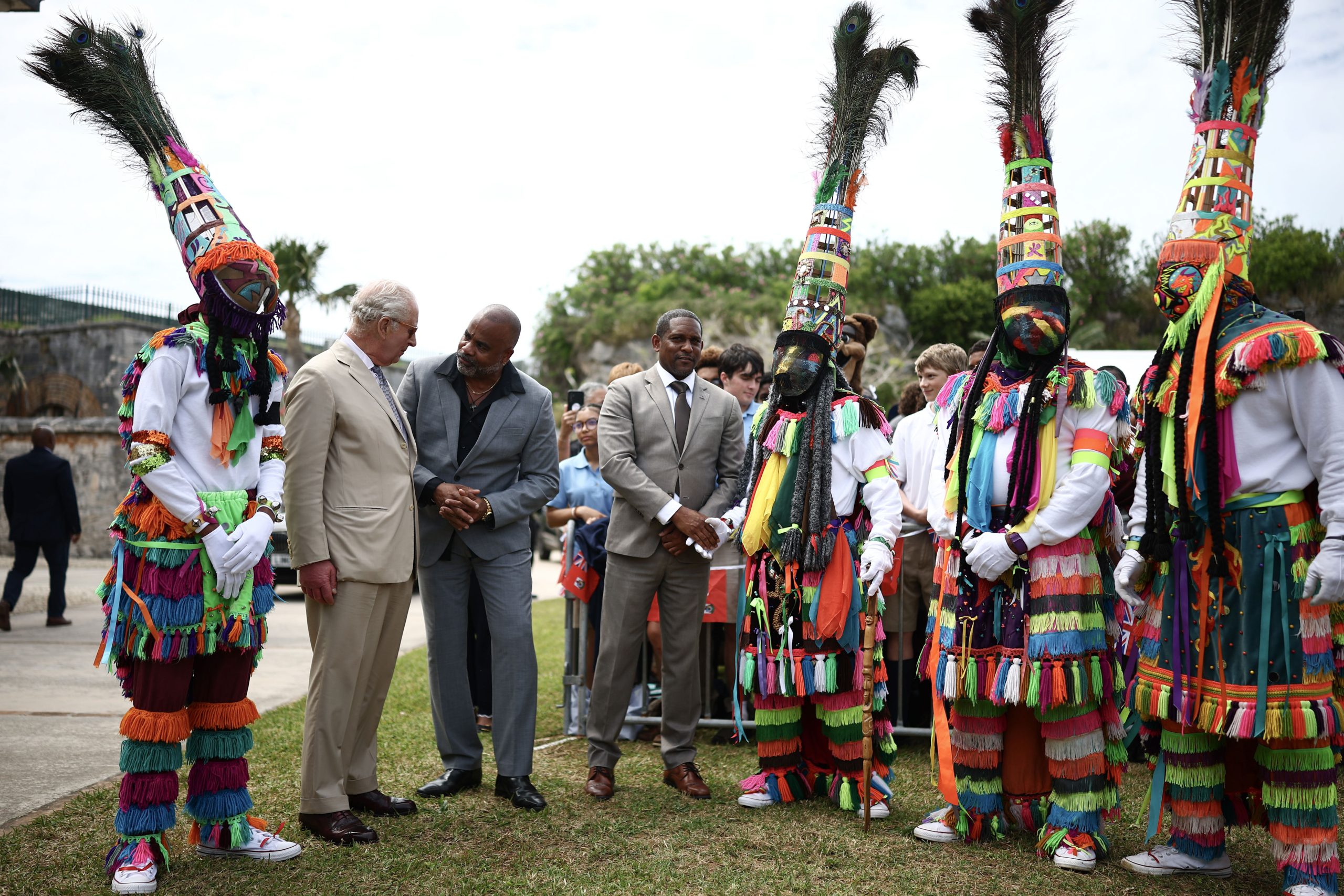
Trott’s message to the King was clear: though the ancestors of today’s Bermudians were “stripped of their identity, names, and language,” the Gombey spirit flourished in their hearts. The 2026 performance served as a powerful reminder that culture is the ultimate form of resistance.
From End to End: Meeting the Innovators of Bermuda
The King’s itinerary was not limited to historical sites. He traveled “from end-to-end” of the island, showcasing a modern Bermuda that is a leader in environmental conservation and creative arts.
A Meeting with the Creator of Muppets
One of the more lighthearted yet impressive stops was a meeting with Michael Frith, the Bermuda-born designer responsible for many of the iconic Muppets characters, and his wife, Kathryn Mullen. This encounter highlighted Bermuda’s outsized contribution to global pop culture and the creative industries. The King, a known patron of the arts, spent time discussing the evolution of puppetry and the importance of storytelling in modern society.
Conservationists of the Future
As a lifelong environmentalist, the King met with “conservationists of the future”—young Bermudians working to protect the island’s unique coral reefs and the endangered Cahow bird. The 2026 visit emphasized that while Bermuda must reckon with its past, it is also a territory looking firmly toward a sustainable future. The King praised the island’s “pioneering spirit” in tackling climate change, an issue that disproportionately affects island nations.
The 2026 Context: Why This Visit Matters Now
The timing of this visit is crucial. In 2026, the British Overseas Territories are re-evaluating their roles within the global landscape. By viewing slavery artefacts and celebrating Gombey culture in the same breath, King Charles III signaled a nuanced understanding of the modern Commonwealth.
Key takeaways from the 2026 Royal Tour include:
Reconciliation through Education: The emphasis on museum displays suggests that the path forward involves a shared understanding of history.
Cultural Validation: By honoring the Gombey tradition, the Crown acknowledges the indigenous and African-descended cultures that were once suppressed.
Direct Engagement: Moving away from distant diplomacy, the “whirlwind series of events” allowed for direct interaction with everyone from youth groups to world-class designers.
Conclusion: A Legacy of Reflection and Hope
King Charles III’s 2026 visit to Bermuda will likely be remembered for its balance. It managed to maintain the military pomp and tradition expected of a royal tour while making space for the heavy, necessary silence required when facing neck irons and shackles.
Bermuda is an island of contrasts—where the scars of the 1500s meet the neon plumes of the Gombey dancers. By acknowledging both, the King has set a tone for a monarchy that is not afraid to look back, even as it moves forward. As the King departed the island paradise, the echoes of the Gombey drums remained, a symbol of a culture that survived the darkest of times to become the vibrant soul of a nation.
The 2026 tour wasn’t just about viewing history; it was about honoring the people who made it out of that history to build the Bermuda of today.