Balancing Liberty and Safety: Prime Minister Starmer’s New Stance on Protest Bans Amid Rising Antisemitism

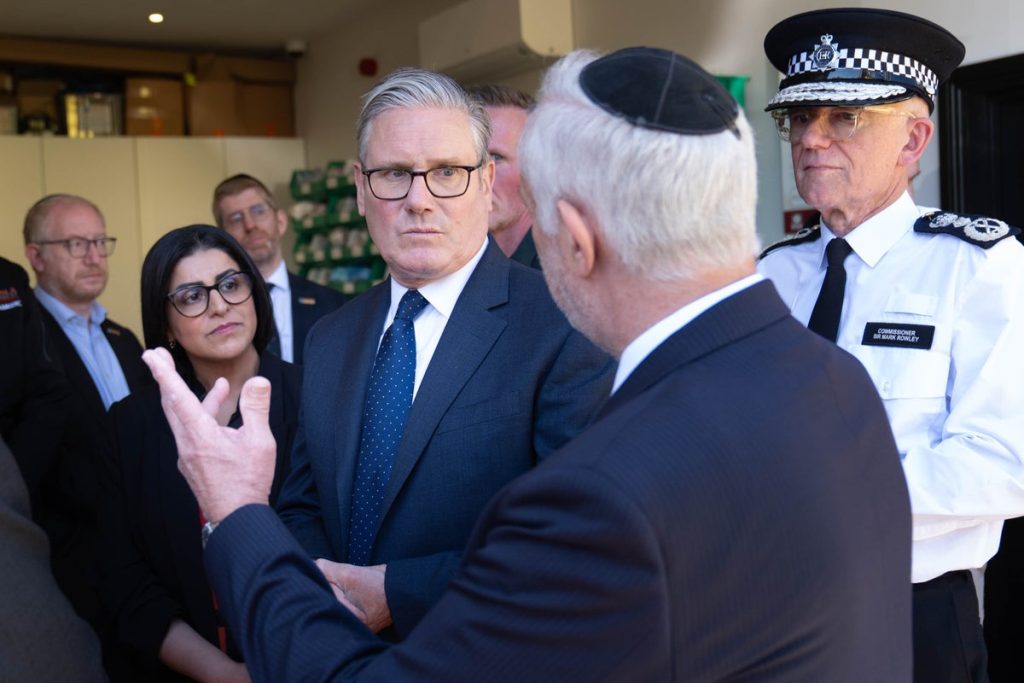
The United Kingdom finds itself at a critical juncture in 2026. As the nation grapples with a surge in hate crimes and the unsettling shadow of the Golders Green terror attack, Prime Minister Sir Keir Starmer has signaled a significant shift in government policy. In a candid interview, the Prime Minister suggested that the state may need to implement bans on certain protests to curb the rise of antisemitism, sparking a fierce national debate over the limits of free speech and the duty to protect vulnerable communities.
The Trigger: A Nation Under Threat
The recent climate of fear within the British Jewish community has been exacerbated by a series of violent incidents. Following the Golders Green stabbings, the UK’s terror threat level has been elevated to “severe,” indicating that an attack is considered highly likely. Metropolitan Police Commissioner Sir Mark Rowley has described the current environment as a “ghastly Venn diagram” of hate, noting that the threat facing Jewish citizens has reached unprecedented levels.
The Prime Minister’s intervention comes after he faced direct hostility during a visit to the affected areas, where protesters confronted him with inflammatory rhetoric. Starmer’s response—that he would fight “with every breath I have” to preserve a tolerant, diverse Britain—highlights the personal and political stakes involved in maintaining social cohesion.
The Case for Restricted Protests
Sir Keir Starmer’s argument rests on the “cumulative effect” of repeated demonstrations. While he maintains a firm commitment to the democratic right to protest, he acknowledged that there are specific instances where the frequency and nature of these marches have become untenable.
Addressing the “Cumulative Effect”
Many members of the Jewish community have voiced concerns that the relentless nature of these protests creates an environment of intimidation. Starmer noted that the government is looking into how to mitigate these cumulative impacts. By drawing parallels to measures taken in France, the Prime Minister has opened the door to a more interventionist approach, suggesting that public order—and the safety of minority groups—must be weighed against the right to assemble.
Cracking Down on Inflammatory Chants
Central to the government’s proposed crackdown is the language used during these marches. Phrases such as “globalise the Intifada” have been identified as specific targets for police action. Starmer has issued a stark challenge to those participating in these demonstrations: if you hear these chants, why are you not calling them out? His message is clear—passive observation in the face of hate is no longer acceptable in the public square.
The Conflict: Civil Liberties vs. Public Safety
The Prime Minister’s proposal has triggered a polarized response from across the political spectrum, highlighting the delicate balance between maintaining order and safeguarding democratic dissent.
Critics of the Proposed Bans
The Green Party, represented by leader Zack Polanski, has been among the most vocal critics, accusing the government of exploiting the fear of Jewish citizens to enact “authoritarian restrictions.” The concern is that by limiting protest, the government risks creating more division rather than fostering unity.
Similarly, Labour peer and former director of Liberty, Shami Chakrabarti, has warned against equating protest with violence. While she agrees that leaders should urge restraint, she cautions that clamping down on peaceful dissent could set a dangerous precedent for British democracy.
Demands for Stronger Action
On the other side of the aisle, Conservative leader Kemi Badenoch has criticized the Prime Minister for what she terms “platitudes.” Her argument is that the government should be taking more direct action, such as banning “hate preachers” from entering the country and revoking the visas of those found to be spreading antisemitism. Lord Walney, the former adviser on political violence, echoed this sentiment, arguing that the government needs to pursue substantive legal changes rather than relying on existing, potentially insufficient, frameworks.
The Role of Law Enforcement
Metropolitan Police Commissioner Sir Mark Rowley is currently navigating this high-pressure environment. With a request for 300 additional officers to combat the “pandemic of antisemitism,” the police are under immense pressure to maintain peace during upcoming protests.
The force is currently evaluating its legal powers to limit two major upcoming rallies in London—one a pro-Palestine march and the other a far-right rally led by Tommy Robinson. The challenge for the police is to act as a neutral arbiter while protecting the public from the rising tide of hate-fueled extremism.
Looking Ahead: The Future of British Tolerance
The debate over banning protests is ultimately a reflection of a deeper crisis in British identity. As the UK faces a “severe” terror threat, the government is attempting to navigate a path that protects its citizens without eroding the fundamental rights that define the nation.
The Government’s Stance: Prioritizing the safety and security of the Jewish community through potential legislative and operational shifts.
The Civil Society Perspective: Protecting the right to peaceful assembly while condemning violence.
- The Policing Challenge: Managing dual threats from extremist ideologies while maintaining public order.
As we move through 2026, the success of the government’s approach will be measured not just by the number of protests banned, but by the ability of the state to foster a society where Jewish citizens—and all minorities—can live without the constant fear of harassment. Sir Keir Starmer has staked his reputation on this mission, but as he has acknowledged, the values of a “decent, tolerant, and diverse” Britain are currently being contested in a way they have not been in decades.
The path forward requires more than just rhetoric; it demands a “whole of society” response. Whether this involves a tightening of protest laws or a more robust enforcement of existing statutes, the primary goal remains the same: ensuring that the streets of Britain remain a place for safe, democratic expression, free from the shadow of hate.