The $5 Billion Divestment: What Happens Next for Professional Golf as LIV Loses Its Backing?

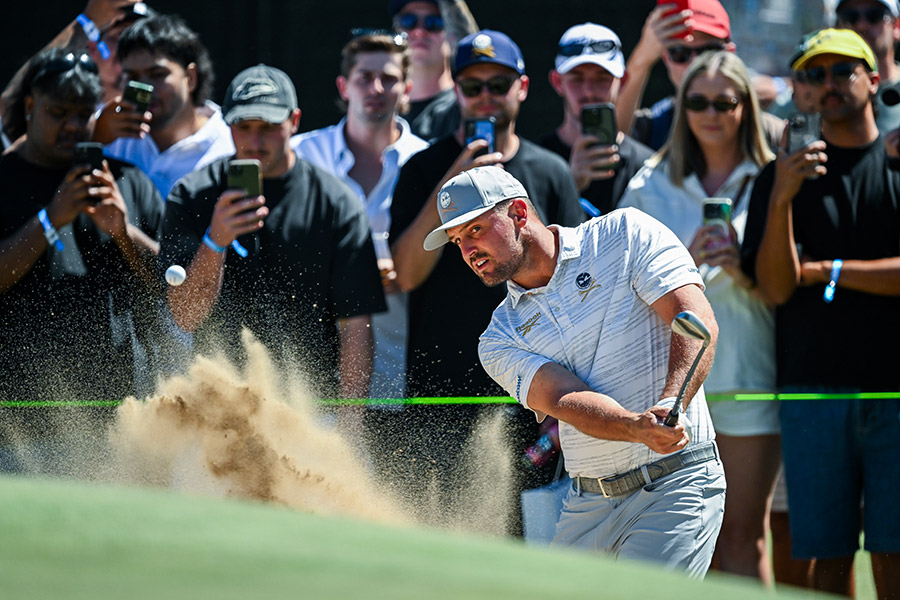
The professional golf landscape has been rocked by an earthquake of financial proportions. After four years of disruption, massive signing bonuses, and a “civil war” that divided the sport, the Saudi Arabian Public Investment Fund (PIF) has officially signaled its exit. As of April 2026, the news that the PIF will withdraw its support at the end of the current season has left the sports world asking one critical question: What now for golf as $5 billion leaves the course?
For the better part of the decade, the narrative of professional golf was defined by an “unlimited” checkbook. However, with reports of monthly losses nearing $100 million and a strategic pivot from Riyadh, the era of the “breakaway league” is entering a volatile transition.
The End of the PIF Era: Why Saudi Arabia is Stepping Back
The withdrawal of the PIF is not merely a financial decision; it is a tectonic shift in the geopolitics of sport. Since its inception in 2022, the PIF has funneled approximately $5 billion into LIV Golf. While the league succeeded in poaching elite talent like Bryson DeChambeau, Dustin Johnson, and Jon Rahm, the path to financial solvency remained elusive.
The Departure of Yasir Al-Rumayyan
Perhaps the most symbolic sign of the end is the stepping down of Yasir Al-Rumayyan, the governor of the PIF and the architect of the LIV project. Al-Rumayyan’s departure from the board marks the conclusion of the “disruption phase.” LIV Golf has announced a “strategic evolution,” shifting from a state-backed project to an entity that must now survive on its own commercial merits.
The Financial Toll
Despite the glitz and glamour, the numbers were sobering. Sources indicate that the league was losing roughly $100 million every month to maintain its $30 million prize purses and massive operational overheads. While revenues for the first five events of 2026 were up by $100 million compared to the previous year, it wasn’t enough to satisfy the long-term investment criteria of the Saudi fund, which is reportedly diversifying its interests toward other global sectors.
The New Leadership: Can Private Equity Save LIV?
In response to the funding vacuum, LIV Golf has established a new independent board led by Gene Davis and John Zinman. These figures are not “golf guys”; they are turnaround specialists with proven track records in navigating complex corporate restructures.
Seeking Long-Term Capital
The “strategic evolution” mentioned by the league involves a desperate hunt for private equity. The goal is to formalize a structure that can attract institutional investors from Wall Street and beyond. Davis and Zinman face the Herculean task of convincing investors that a league without sovereign wealth backing can still be profitable.
Commercial Momentum vs. Operational Costs
The league maintains that 10 of its 12 teams are expected to turn a profit this season. This “franchise model” was always the intended endgame for LIV, where team owners would take on the financial burden. However, with the central “mother ship” losing its primary fuel source, the pressure on these franchises to secure independent sponsorships has reached a fever pitch.
The Player Predicament: Will the Stars Stay or Go?
The most immediate concern for fans and sponsors is the fate of the players. When the PIF money was guaranteed, the choice was simple: take the generational wealth. Now, the math has changed.
The Bryson DeChambeau $500 Million Question
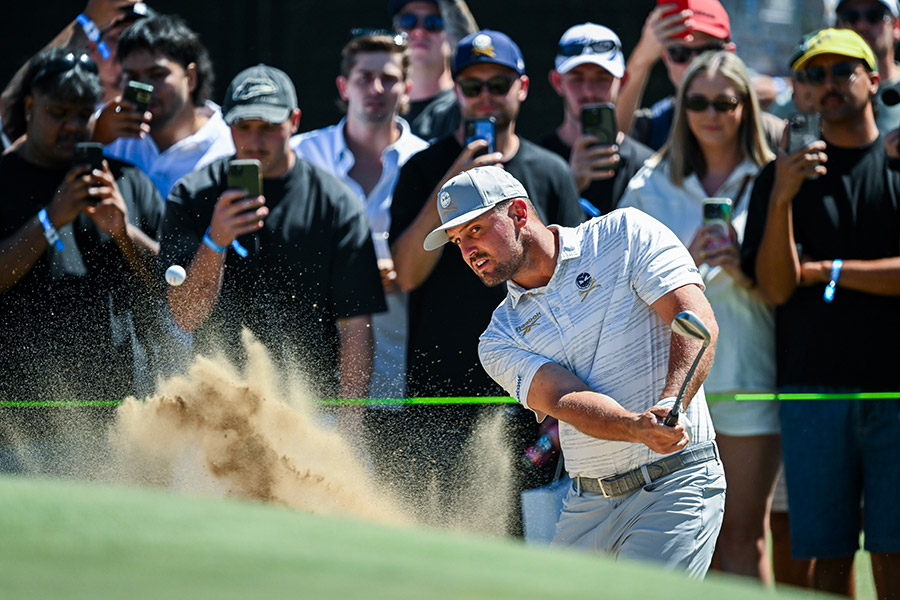
Bryson DeChambeau, who has become the face of the league’s “Crushers GC” brand, is reportedly seeking a renewal deal worth more than $500 million. Under the new financial reality, such a figure seems nearly impossible unless a massive private equity deal is struck immediately. DeChambeau’s contract, along with those of Dustin Johnson and Brooks Koepka, remains a pivot point for the league’s credibility.
Jon Rahm and the “Legion XIII” Factor
Jon Rahm, the captain of Legion XIII, remains a vocal supporter of the league’s “differentiated” product. However, even Rahm’s influence has limits. If the prize money drops or the “global league” vision shrinks due to budget cuts, the lure of returning to a unified PGA Tour—which has recently secured its own massive investment from the Strategic Sports Group (SSG)—may become irresistible.
A Dormant Summer: The 2026 Schedule Shake-up
The financial uncertainty is already affecting the calendar. LIV has postponed its June event in New Orleans, creating a significant gap in its US presence. The league will remain largely dormant in the United States between May 10 and August 6, a move that many analysts interpret as a cost-saving measure.
The Global Pivot
To survive, LIV is leaning into its international identity. Events are still scheduled for:
South Korea
Spain
- Britain
By focusing on markets that are often underserved by the PGA Tour, LIV hopes to maintain its “passionate fans” and “world-class talent” while lowering the astronomical costs associated with competing for airtime in the crowded American sports market.
The Broader Impact on Professional Golf
The withdrawal of $5 billion isn’t just a LIV Golf problem; it’s a “golf” problem. For the past four years, the entire ecosystem has been inflated. The PGA Tour was forced to increase its purses to “Signature Event” levels to keep players from defecting. If the “threat” of LIV money disappears, will the PGA Tour maintain these high payouts?
The Return to Unity?
The “civil war” has left most stars appearing “worse players than they were four years ago,” according to some critics. The lack of World Golf Ranking points for LIV events and the fractured nature of the majors has diluted the product. With the PIF out of the picture, the leverage held by LIV players has vanished. This could accelerate a merger or a “peace treaty” that finally reunites the world’s best players under one umbrella.
The Recognition Gap
LIV has consistently struggled with gaining recognition from golf’s governing bodies. Without World Golf Ranking points, even the best players in the world find themselves sliding down the rankings, making qualification for the Masters, the US Open, and the Open Championship a logistical nightmare. This “unfair” exclusion, as many LIV proponents call it, becomes an even bigger hurdle when there isn’t a $50 million signing bonus to soften the blow.
Analysis: Is This the Death Knell for the Breakaway League?
While the headlines suggest a collapse, the leadership at LIV remains defiant. Gene Davis believes the league has “built something truly differentiated.” The increase in revenue for the early 2026 events suggests that there is a market for the team-based, “Golf, But Louder” format.
However, the transition from “Sovereign Wealth Funded” to “Market Driven” is a path littered with failures. Without the PIF to “plug the gap” of $100 million a month, LIV must become a lean, mean, commercial machine overnight.
Key Challenges Ahead:
- Sponsorship: Securing Tier-1 global sponsors who were previously wary of the Saudi connection.
- Broadcasting: Moving beyond YouTube and minor networks to major global TV deals.
- Player Loyalty: Convincing stars to play for “equity” rather than “guaranteed cash.”
Conclusion: A New Chapter for the Green Grass
As we look toward the end of 2026, the “gold rush” in professional golf is officially over. The $5 billion that flooded the fairways has left a permanent mark, forever changing player compensation and tour structures. But as the Saudi PIF retreats, the sport finds itself at a crossroads.
Will LIV Golf reinvent itself as a sustainable, private-equity-backed global circuit? Or will 2026 be remembered as the year the “LIV experiment” finally ran out of fuel, leading to a humbled reunification of the sport? One thing is certain: the era of the “blank check” is finished, and golf must now learn to live within its means once again.