Geopolitical Shift: Trump Weighs Troop Reductions in Germany Amid Strained Ties with Chancellor Merz

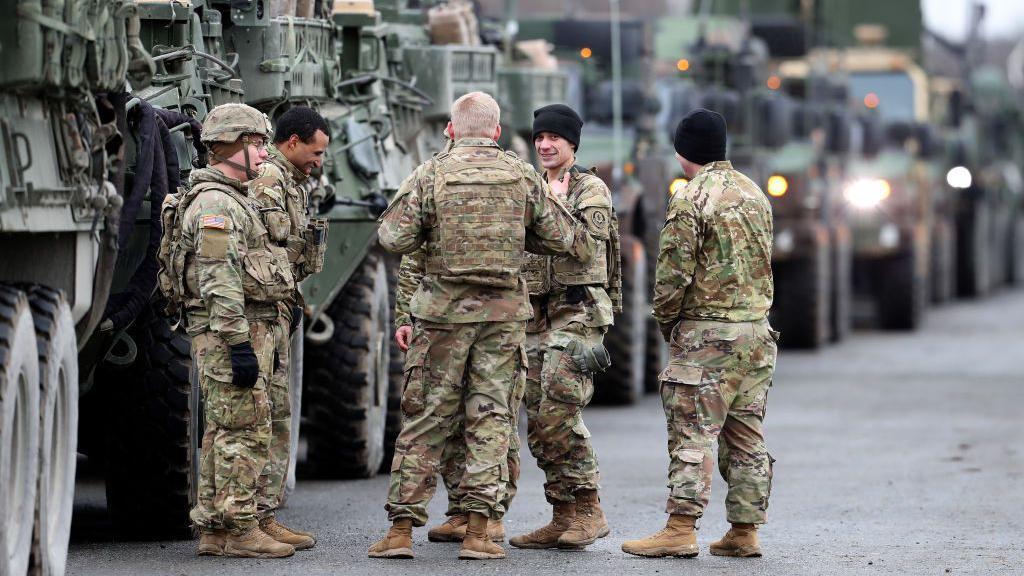
The landscape of transatlantic relations is undergoing a profound transformation in 2026. President Donald Trump has officially signaled that the United States is “studying and reviewing” a potential reduction of the thousands of American troops currently stationed on German soil. This announcement, delivered via social media, comes at a time of heightened friction between Washington and Berlin, centering on the ongoing war in Iran and the future of the NATO alliance.
With over 36,000 active-duty personnel currently serving in Germany, any significant withdrawal would represent a historic pivot in US foreign policy. As the White House evaluates the future of this military footprint, the international community is left to wonder: Is this a tactical negotiation strategy, or the beginning of a fundamental restructuring of the post-WWII security architecture?
The Catalyst: A Diplomatic War of Words
The tension between President Trump and German Chancellor Friedrich Merz reached a boiling point this week. The catalyst for the latest diplomatic spat began when Merz, addressing university students in Marsberg, offered a blistering critique of American foreign policy regarding the conflict in Iran.
Merz’s Criticism of US Strategy
Chancellor Merz did not mince words, suggesting that the United States had been “humiliated” by Iranian negotiators. He argued that the US lacked a coherent strategy, noting that American officials had traveled to Islamabad for talks only to return empty-handed. Merz remarked that the “entire nation” was being humiliated by the Iranian leadership’s refusal to engage in meaningful diplomacy.
Trump’s Retaliatory Response
President Trump was swift to respond, taking to Truth Social to express his disdain for the Chancellor’s assessment. Trump claimed that Merz was effectively advocating for Iran to possess a nuclear weapon and asserted that the Chancellor “doesn’t know what he’s talking about.” The President further disparaged Germany’s current economic status, framing the critique as a sign of Germany’s internal decline.
The Future of US Military Presence in Germany
The prospect of reducing US military assets in Europe is not entirely new, but the current context makes it particularly volatile. For decades, Germany has served as the strategic heart of the US military presence in Europe. A drawdown would not only affect the logistics of US operations but would also signal a major shift in how the US views its commitments to European security.
Understanding the Strategic Weight
The 36,000 troops stationed in Germany provide critical support for operations ranging from intelligence gathering to rapid deployment capabilities. These bases serve as a logistical hub for the US military, facilitating missions across the Middle East and Africa. A reduction could force a massive restructuring of how the Pentagon projects power across the Atlantic.
The NATO “Paper Tiger” Rhetoric
President Trump’s threat to reduce troop levels is inextricably linked to his broader grievances with the 32-member NATO alliance. Over the past two months, the President has repeatedly labeled the alliance a “paper tiger” and a “one-way street,” suggesting that European allies are failing to carry their fair share of the financial and military burden.
Recent reports of a leaked Pentagon email have further exacerbated these tensions. The document allegedly explored ways to punish allies deemed unsupportive of the US campaign in Iran, including a controversial suggestion to suspend Spain from NATO. While NATO officials have clarified that the founding treaty does not contain provisions for suspension or expulsion, the mere existence of such discussions highlights the deteriorating trust within the alliance.

Economic and Geopolitical Implications
The fallout from this public feud extends far beyond military logistics. It touches on the very core of the Western economic and political order.
- Economic Strain: Trump’s rhetoric regarding Germany’s “poor economic performance” suggests that the US may use trade and economic pressure as a lever to force compliance on foreign policy issues.
- Diplomatic Fragility: Despite the harsh exchanges, Chancellor Merz has attempted to de-escalate, stating that his “personal relationship” with the American President remains intact. However, the political reality is that the European public is increasingly skeptical of a US-led security umbrella that feels increasingly transactional.
- The “New World Order”: Analysts suggest that we are witnessing the dawn of a “Trumpian World Order,” where traditional alliances are replaced by bilateral agreements based on immediate national interest rather than long-standing ideological commitments.
Can the Alliance Hold?
The question remains whether the US will follow through on its threat to downsize its German deployment. Historically, these threats are often used as bargaining chips to secure larger defense spending from European partners. However, given the current administration’s skepticism toward multilateralism, there is a genuine risk that this “study” will lead to a definitive withdrawal.
Germany, for its part, is in a difficult position. It must maintain its commitment to European security while navigating the unpredictable nature of the current US administration. The shift in tone from Berlin suggests that Europe is preparing to adjust its strategy, potentially seeking greater “strategic autonomy” to protect its interests independently of Washington.
Conclusion: A Turning Point in 2026
As the White House prepares to make a determination in the “next short period of time,” the world watches closely. The potential reduction of US troops in Germany is more than a budgetary decision; it is a signal of a changing global landscape. Whether this leads to a revitalized alliance or a fractured Western bloc, one thing is certain: the era of unquestioned transatlantic cooperation has reached a critical juncture.
The coming weeks will likely see intense diplomatic maneuvering. If the US proceeds with a reduction, it will mark the most significant shift in European security since the end of the Cold War. If it chooses to maintain the status quo, it will be only after securing major concessions from Berlin regarding the war in Iran and broader NATO contributions.