The Long Road to Truth: Coroner Delivers Findings on the 1972 Springhill and Westrock Shootings

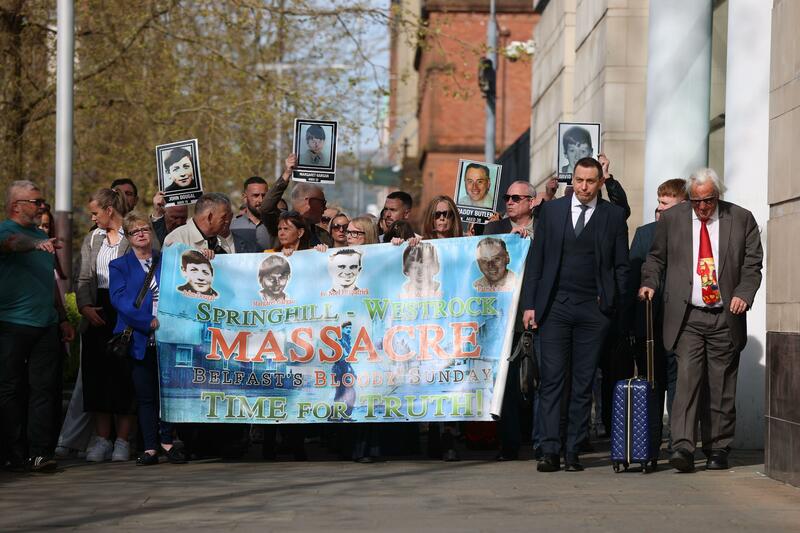
Fifty-four years of silence, grief, and persistent campaigning have finally reached a pivotal moment in Northern Ireland. In a landmark development for the families of those lost during the Troubles, a Belfast coroner has delivered his findings regarding the tragic deaths of five civilians in the Springhill and Westrock areas of west Belfast.
The shootings, which occurred on July 9, 1972, involved members of the British Army. For over half a century, the families of the victims have sought official acknowledgment of the innocence of their loved ones and a transparent account of the events that transpired on that fateful summer day.
The Victims: A Community Forever Changed
The lives cut short on July 9, 1972, were those of ordinary people whose deaths left an indelible scar on the west Belfast community. The victims included:
- Father Noel Fitzpatrick (42): A local priest whose presence in the area was defined by his pastoral care.
- Patrick Butler (38): A devoted father-of-six.
- John Dougal (16): A teenager whose future was stolen at the threshold of adulthood.
- David McCafferty (15): Another young life lost amidst the chaos of the conflict.
- Margaret Gargan (13): The youngest of the victims, whose death remains a profound tragedy for her family and community.
For decades, these names have been synonymous with the demand for justice. The families have consistently maintained that the victims were innocent civilians and that the lethal force used by soldiers that day was both indiscriminate and unjustified.

The Legal Journey: From 1973 to 2026
The road to these findings has been anything but straightforward. The original inquest, held in 1973, returned an open verdict, failing to provide the closure or the truth the families so desperately required. It was not until 2014, following years of advocacy, that the Attorney General for Northern Ireland ordered a fresh inquest into the killings.
This latest investigation was conducted under the shadow of significant political pressure. The inquest concluded in April 2024, racing against the deadline imposed by the UK government’s contentious Legacy Act. This legislation sought to implement a “guillotine” on various conflict-related court cases. The Springhill and Westrock inquest stands as one of the final, critical investigations to be completed before the legal landscape for Troubles-era cases shifted dramatically.
Mr. Justice Scoffield’s Findings
Addressing the Belfast Coroner’s Court in 2026, Mr. Justice Scoffield opened his remarks with a profound apology to the families. He acknowledged the staggering length of time they had been forced to wait for these findings, noting that his final report spans approximately 640 pages.
The sheer volume of the documentation reflects the complexity of the evidence, the conflicting testimonies, and the weight of the historical record. For the families, these 640 pages represent more than just a legal document; they represent the culmination of over 50 years of truth recovery.

The “Time for Truth” Movement
The atmosphere at the Belfast Coroner’s Court was one of solemnity mixed with a quiet, steely resolve. As families and friends gathered, they carried a banner reading “Time for Truth,” a slogan that has become the rallying cry for many victims’ groups across Northern Ireland.
The presence of high-profile figures, including former Sinn Féin president Gerry Adams and various local MPs and MLAs, underscored the political significance of the inquest. However, the day belonged firmly to the families of the victims. In a joint statement, the relatives of Butler, Gargan, Dougal, and McCafferty expressed the duality of their emotions:
“We have consistently maintained that those who died were innocent civilians… We now await the coroner Justice Scoffield’s findings. We do so with both hope and apprehension – hope that the findings will reflect the full circumstances of what happened, and apprehension because of the weight this moment carries for all of our families.”
Analyzing the Impact of the Legacy Act
The context of this inquest is inseparable from the broader debate regarding the Northern Ireland Troubles (Legacy and Reconciliation) Act. While the Labour government is currently reviewing the legislation, the impact of the May 1 deadline in 2024 remains a point of intense scrutiny.
The Springhill and Westrock inquest serves as a case study for why these investigations matter. Critics of the Legacy Act argue that stopping such inquests denies families the right to an effective investigation, a cornerstone of human rights law. Proponents of the legislation, meanwhile, have often cited the need to “move on” from the past. However, the dedication of the Springhill families demonstrates that for those directly affected, “moving on” is impossible without first arriving at the truth.
A Legacy of Resilience
The delivery of these findings is a historic moment in the post-conflict era of Northern Ireland. It highlights the persistence of civil society in seeking accountability, even when faced with institutional delays and legislative barriers.
Whether the findings provide the legal vindication the families have sought for over half a century is a question that will be debated by legal scholars and historians for years to come. Yet, the emotional weight of this conclusion is undeniable. By finally having the circumstances of the 1972 shootings placed on the public record, the families have ensured that the stories of Father Noel Fitzpatrick, Patrick Butler, John Dougal, David McCafferty, and Margaret Gargan will not be forgotten.
In the broader narrative of the Troubles, this inquest serves as a reminder that the past is never truly “past.” It remains a living, breathing component of the present, demanding recognition, empathy, and, above all, the truth.