The Border in the Field: Why the ISDS Flag Dispute is Pulling the DUP and Sinn Féin into a Bitter Dogfight

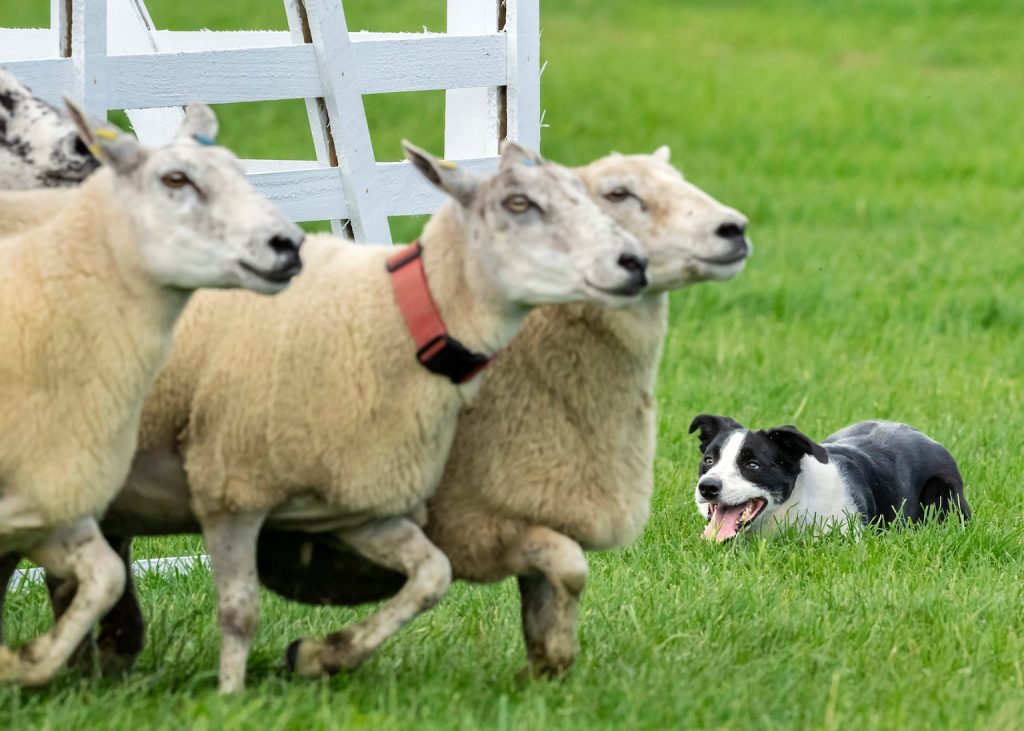
The rolling green hills of the British Isles and Ireland have long been the stage for one of the world’s most disciplined and traditional displays: the sheepdog trial. However, in 2026, the whistle of the shepherd is being drowned out by a cacophony of political discord. What began as a local disagreement within the International Sheep Dog Society (ISDS) has escalated into a high-stakes cultural battle, drawing in the heavyweights of Northern Irish politics—the Democratic Unionist Party (DUP) and Sinn Féin.
At the heart of the “dogfight” is the flying of the Irish tricolour at international events. While the ISDS has operated with a 32-county Irish section for over a century, the symbols used to represent that section have become a flashpoint for identity, heritage, and political sovereignty.

The Core of the Conflict: A 120-Year Legacy at Stake
Established in 1906, the International Sheep Dog Society is a registered charity based in Bedford, England. It serves as the governing body for sheepdog trials across the UK and Ireland, maintaining the purity of the working Border Collie and managing the prestigious National and International Trials.
Historically, the ISDS is structured by nation. England, Scotland, Wales, and Ireland each have their own sections. However, the “Irish Section” operates on an all-island basis, encompassing members from both the Republic of Ireland and Northern Ireland. For decades, the Irish tricolour has been the primary flag flown to represent this unified section.
In the current climate of 2026, where discussions regarding a “New Ireland” and the post-Brexit landscape of Northern Ireland remain sensitive, this long-standing tradition is being challenged. Critics argue that the exclusive use of the tricolour fails to respect the “diverse membership” of the society, particularly those from a unionist background in Northern Ireland.
The Unionist Challenge: DUP Demands a Neutral Field
The controversy reached a boiling point when a group of Unionist MPs at Westminster, led by DUP leader Gavin Robinson, formally intervened. In a letter addressed to the ISDS leadership, the DUP expressed deep concerns that the current flag protocol is exclusionary.
The Argument for Neutrality
The DUP’s stance is rooted in the principle of mutual respect and the recognition of Northern Ireland’s constitutional position within the United Kingdom. According to the letter seen by the Irish News, the unionist representatives argued that:
- Exclusivity breeds division: Flying only the Irish tricolour does not represent the British identity of many members in the Irish Section.
- Constitutional Alignment: The current policy is viewed as being at odds with the ISDS’s own constitution, which should theoretically cater to all members regardless of political affiliation.
- Alternative Solutions: The DUP has urged the society to consider flying multiple flags (such as the Union Jack alongside the tricolour) or adopting a neutral, society-specific flag—similar to the approach taken by some all-island sporting bodies like the IRFU (Irish Rugby Football Union).
Gavin Robinson emphasized that the goal is not to “ban” the tricolour, but to ensure that the “diverse membership” of the society feels represented rather than alienated at international gatherings.
Sinn Féin’s Retort: Protecting the Tricolour and Heritage
The response from the republican side was swift and substantial. No fewer than 52 Sinn Féin representatives, including MPs, TDs, and senators, signed a counter-letter demanding that the ISDS retain the tricolour as the sole representative flag for the Irish Section.

Symbolism of the Green, White, and Orange
Sinn Féin’s argument hinges on the historical intent of the flag itself. They maintain that the Irish National Flag was designed to symbolize peace and inclusion between the “Green” (nationalist) and the “Orange” (unionist) traditions, with the “White” representing the truce between them.
Key points from the Sinn Féin response include:
- Historical Precedent: The tricolour has been used by the ISDS Irish Section for generations without major incident until recently.
- Identity Erosion: Many members feel that moving toward a neutral flag would erode their cultural heritage and the “all-island dynamic” of the sport.
- Opposition to Politicisation: Sinn Féin has accused unionist politicians of “politicising” a sporting protocol and has urged the ISDS to avoid making changes that would cause widespread disquiet among the majority of its Irish members.
The Charity Commission: A Legal Minefield
The row has moved beyond the fields of competition and into the halls of regulation. A formal complaint has been lodged with the Charity Commission for England and Wales. Because the ISDS is a registered charity, it must adhere to strict guidelines regarding its purpose and the benefit it provides to the public.
A spokesperson for the Charity Commission confirmed they are currently “assessing concerns” to determine if there has been a breach of charitable duties. The crux of the legal issue lies in whether the society’s flag policy constitutes a form of political bias or if it fails to provide an inclusive environment for its beneficiaries. If the Commission finds that the ISDS is failing in its duty of neutrality or inclusivity, it could force a mandatory change in protocol.
Comparing All-Ireland Bodies: The “Rugby Model” vs. The “Olympic Model”
The ISDS is not the first organization to struggle with the complexities of 32-county representation. In 2026, the precedents set by other sports are being heavily cited:
- Irish Rugby (IRFU): Uses a unique “Four Provinces” flag and a specific anthem (“Ireland’s Call”) for international matches to ensure both unionist and nationalist players and fans feel included.
- Hockey Ireland: Similarly uses the Four Provinces flag.
- Team Ireland (Olympics): Operates under the Irish tricolour, as it represents the National Olympic Committee of Ireland.
The DUP is essentially pushing the ISDS toward the “Rugby Model,” while Sinn Féin is adamant that the “Olympic Model”—which uses the national flag—is the only appropriate way to represent a nation on the world stage.
The 2026 Political Landscape: Why Symbols Matter Now
Why has this row erupted so fiercely in 2026? Several factors are at play:
- The “Operation Raise the Colours” Influence: A growing movement across the UK has seen a resurgence in the public display of national flags, often sparking counter-movements in Ireland.
- Post-2025 Political Shifts: Following major speeches by leaders like Mary Lou McDonald in early 2025 regarding Irish unity, unionist communities have become increasingly protective of British symbols in Northern Ireland.
- The Flag Consultation Legacy: Ongoing debates regarding the legal flying of flags for “celebration and commemoration” (stemming from earlier Alliance Party bill attempts) have kept the “flags issue” at the forefront of the public consciousness.
For many in the ISDS, the sheepdog trials were a rare “neutral ground” where farmers from Armagh, Cork, Wales, and the Scottish Highlands could meet on equal terms. The fear now is that the “politicisation of the whistle” will destroy the social fabric of the society.
Conclusion: A Test of Diplomacy for the ISDS
The International Sheep Dog Society now finds itself in an unenviable position. If they maintain the status quo, they risk further alienating unionist members and potentially facing sanctions from the Charity Commission. If they adopt a neutral flag, they face a massive backlash from nationalist members who see it as a surrender of their identity.
As the 2026 international season approaches, the eyes of the political world are—unusually—on the sheepdog trials. Whether the ISDS can find a “middle field” remains to be seen. In a land where a flag is never just a piece of cloth, the resolution of this “dogfight” will be a significant indicator of how all-island bodies will navigate the complex identity politics of the late 2020s.