Golders Green Terror Attack: Bodycam Footage Reveals Dramatic Arrest of Knife-Wielding Suspect

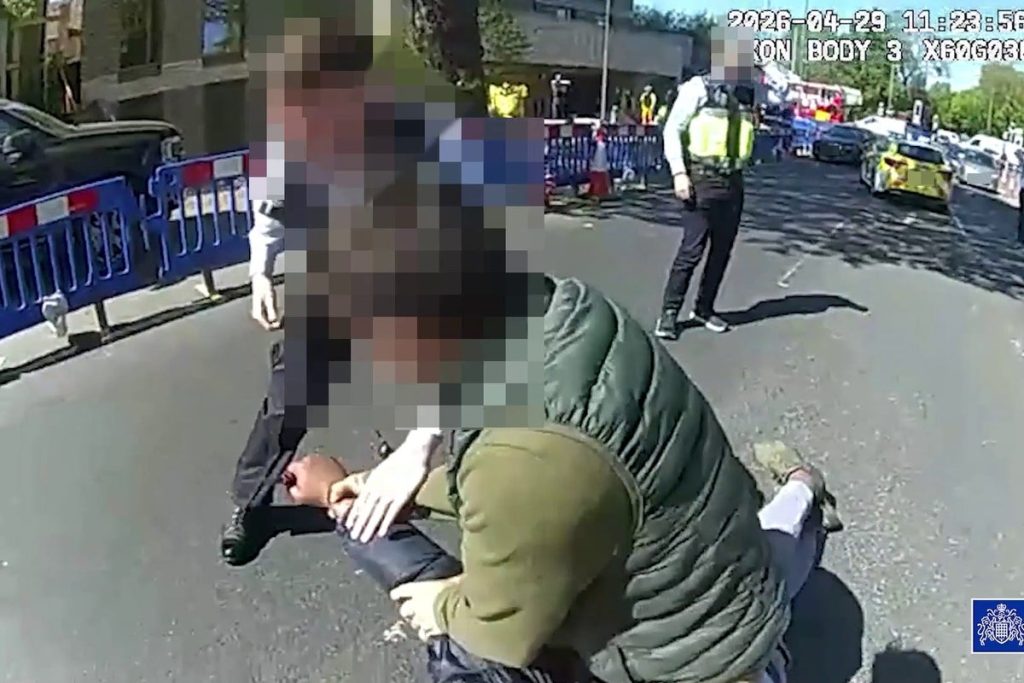
The quiet, leafy streets of Golders Green, a neighborhood known for its vibrant Jewish community, were shattered in April 2026 by a harrowing act of violence. In a chilling incident that authorities have officially classified as a terrorist attack, two men—one in his 30s and another in his 70s—were targeted in a stabbing assault that has sent shockwaves across London.
As the Metropolitan Police released body-worn camera footage of the arrest, the public has been granted an unfiltered look at the high-stakes confrontation between law enforcement and a 45-year-old Somali-born British national. The incident has reignited national debates regarding public safety, the rise of antisemitic hate crimes, and the appropriate use of force by officers in volatile, life-threatening situations.
The Anatomy of the Attack and Police Response
The attack, which occurred in broad daylight on Highfield Avenue, left two members of the Jewish community with serious stab wounds. The victims, whose ages highlight the indiscriminate nature of the threat, were treated at the scene by paramedics before being rushed to local hospitals. Fortunately, both men have remained in a stable condition, though the psychological impact on the community is profound.
When police arrived, they were met with an immediate threat. The suspect, clad in a blue puffer jacket and carrying a rucksack, did not surrender. Instead, he advanced toward the responding officers while brandishing a knife.
The Taser Confrontation
The body-worn footage shows the rapid escalation of the event. As the suspect ignored verbal commands, officers deployed their Tasers. The effectiveness of the Taser was immediate but temporary, as the suspect struggled on the pavement, refusing to relinquish the weapon.
- The Arrest Procedure: Officers can be heard shouting urgent, repetitive commands, including “get down on the ground” and “drop the knife.”
- Civilian Intervention: In a striking moment of the video, a plain-clothed individual—believed to be a member of the local Shomrim security team—assisted in the struggle, helping to wrench the blade from the suspect’s hand.
- Tactical Restraint: Once the weapon was secured, officers were able to handcuff the suspect, pinning him face-down to the tarmac while reinforcements flooded the area.
Controversies Over Use of Force
While the police were successful in neutralizing the threat without any officers sustaining injuries, the released footage has sparked significant controversy on social media. Critics, including Green Party leader Zack Polanski, have pointed to segments of the video where officers appear to be using aggressive physical force while the suspect is on the ground.
The Public Debate
The core of the criticism centers on the ethical boundaries of police conduct. Some observers argue that the officers’ actions—specifically the kicking and aggressive jostling of the suspect—exceeded what was necessary to secure a suspect who had already been incapacitated by a Taser.
Conversely, supporters of the police response emphasize the “fog of war.” A suspect wielding a knife in a public space, having already committed a terror-related stabbing, presents a fluid and deadly threat. Officers must make split-second decisions to ensure they do not become victims themselves, and the adrenaline of such an encounter often dictates the intensity of the response.
Official Oversight
Despite the public outcry, the Independent Office for Police Conduct (IOPC) has confirmed that it has not received a formal referral regarding the nature of the arrest. This suggests that, at least for the moment, the Metropolitan Police’s internal review processes have not identified a breach of protocol that would warrant external investigation.
Rising Antisemitism in London
This incident in Golders Green did not occur in a vacuum. It follows a concerning trend of antisemitic attacks across London, leading to increased patrols and heightened security measures in neighborhoods with large Jewish populations.
London Mayor Sadiq Khan and other officials have condemned the attack as “appalling,” calling for unity and increased vigilance. For the Jewish community, the incident is yet another reminder of the persistent threat of radicalization and hate-motivated violence. The fact that this was declared a terrorist incident highlights the government’s commitment to treating such stabbings not just as common crimes, but as attempts to spread fear and division within the social fabric of the UK.
Analysis: The Role of Community Security
The involvement of the Shomrim—the Jewish volunteer neighborhood watch—in this incident brings up an interesting aspect of modern urban policing. In areas where specific minority groups feel targeted, these volunteer organizations often serve as the first line of defense. Their coordination with the Metropolitan Police during this incident may well have prevented further casualties.
However, the reliance on such groups also reflects a growing anxiety about state-provided security. As we look ahead through 2026, the challenge for the Home Office will be to bridge the gap between community-led security and official law enforcement to ensure that all citizens, regardless of their background, feel safe walking the streets of London.
Looking Forward: Legal and Social Implications
The 45-year-old suspect remains in custody, facing charges related to the attempted murder of the two victims. The legal process will likely delve deeper into the suspect’s background, his motivations, and whether he acted alone or as part of a larger extremist network.
As the trial approaches, the video footage will undoubtedly serve as a central piece of evidence. Whether it will be used to prosecute the suspect for terrorism or to debate the necessity of the officers’ force remains to be seen. For now, the residents of Golders Green are left to grapple with the reality that their neighborhood was the stage for such a violent display of hatred.
The events of this day serve as a stark reminder of the complexities of policing in a modern, diverse, and often volatile society. The balance between maintaining public order and upholding the human rights of suspects remains a delicate, and often divisive, tightrope walk for the Metropolitan Police.