Massive Cross-Border Gun Bust: 89 Firearms Seized in High-Stakes New York Smuggling Plot

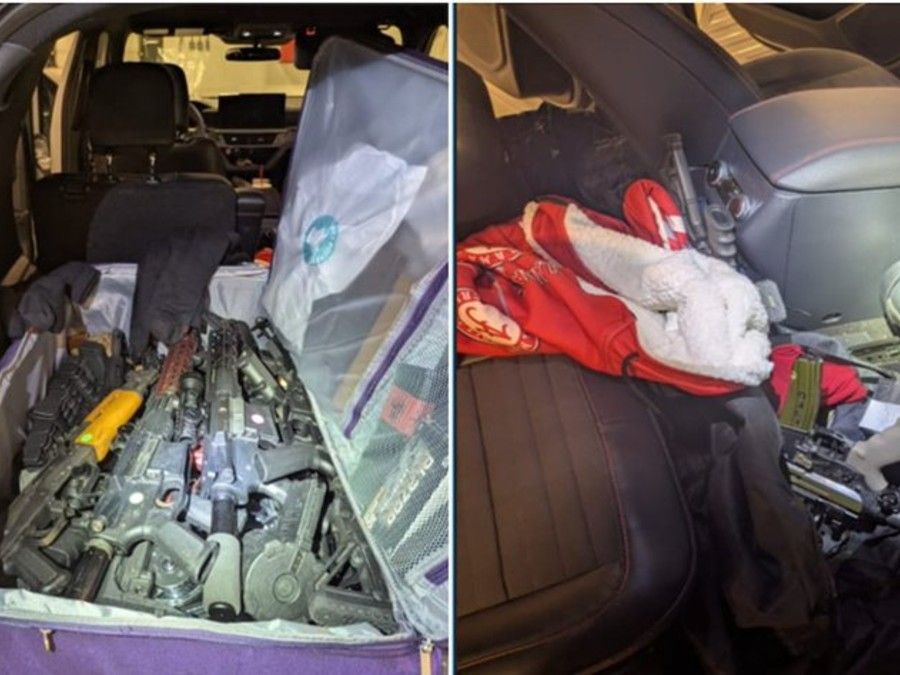
The illicit flow of firearms across the U.S.-Canada border remains a top-tier security concern for North American law enforcement. In a major development that highlights the persistence of international arms trafficking, U.S. authorities recently dismantled a sophisticated smuggling operation. Following a routine traffic stop in New York State, investigators uncovered a massive cache of 89 firearms, leading to the arrest of three individuals attempting to move the weapons into Canadian territory.
This case, which has drawn significant attention from federal agencies including the FBI and the ATF, underscores the dangerous intersection of illegal gun distribution and cross-border criminal activity. As we analyze the details of this 2026 bust, we gain insight into how law enforcement agencies are collaborating to curb the tide of illegal weapons that often contribute to violent crime in Canada.
The Routine Stop That Uncovered an Arsenal
The incident began on a seemingly ordinary day when New York State Police (NYSP) troopers observed traffic violations on State Route 90. The vehicle in question, a rented white Ford Explorer, was pulled over shortly after 6:00 p.m. What started as a standard roadside check quickly escalated into a complex federal investigation.
The three men inside the vehicle were identified as:
Malik Bromfield (22): A Canadian citizen and the driver of the vehicle.
Faizan Ali (25): A citizen of Pakistan.
Kamal Salman (22): A citizen of Canada, the United States, and Jordan.
During the initial interaction, the troopers noted that the occupants provided “inconsistent and evasive” accounts regarding their travel plans and the contents of their vehicle. This behavioral red flag prompted the officers to request a search of the SUV.
The Discovery of the Cache
Upon deploying a canine unit to conduct an exterior sweep, the troopers confirmed their suspicions. A subsequent search of the vehicle revealed a heavily weighted suitcase packed with an alarming quantity of weaponry. In addition to the 89 firearms, police recovered approximately $3,000 in U.S. currency, predominantly in $100 bills, stashed within the glovebox.
The sheer volume of weapons—which included short-barreled rifles and at least 17 firearms previously reported as stolen—made it clear to authorities that this was not a matter of personal ownership. Instead, it bore all the hallmarks of a professional, organized trafficking ring.
Federal Charges and Legal Consequences
The U.S. Attorney’s Office for the Southern District of New York has moved aggressively against the trio. Given the scale of the operation, the suspects face a battery of federal charges that could result in significant prison time if they are found guilty.
The Breakdown of Charges
Each of the three men has been formally charged with:
- Smuggling from the United States: Carries a maximum penalty of 10 years in prison.
- Unlicensed Dealing in Firearms: Carries a maximum penalty of five years in prison.
- Transporting Stolen Firearms in Interstate Commerce: Carries a maximum penalty of 10 years in prison.
- Unlawful Possession of Firearms: Carries a maximum penalty of 10 years in prison.
Additionally, Malik Bromfield faces an extra charge of unlawful possession of a firearm by an alien, which carries a potential 15-year sentence. The FBI’s investigation into the suspects’ backgrounds revealed that none of the men held a license as an importer, manufacturer, or dealer, nor had they applied for the necessary export authorizations to move such a large quantity of arms across international borders.
Tracking the Smuggling Route
The investigation into the suspects’ movements provided a clear picture of a planned cross-border trek. Digital evidence played a crucial role in the FBI’s case. When officers seized a cellphone from Bromfield, they discovered a GPS navigation app with a pinned address in or near Hammond, New York.
Geographically, Hammond sits directly across the St. Lawrence River from Ontario, Canada—a known hot spot for small-vessel and land-based smuggling operations. Furthermore, digital tracking confirmed that the Ford Explorer had been spotted moving northbound on the I-95 in Jupiter, Florida, just one day prior to the stop. This suggests a long-haul operation aimed at moving firearms from the southern United States into the northern border regions.
Why Border Security Remains a Priority in 2026
The proliferation of illegal firearms from the United States into Canada remains a significant driver of violent crime in Canadian urban centers. Law enforcement officials have frequently noted that the vast majority of guns seized in connection with Canadian crimes are traced back to illegal imports from the U.S.
The Impact on Public Safety
The seizure of 89 weapons in a single stop is a testament to the vigilance of local and federal law enforcement. By taking these weapons off the street before they could reach their destination, authorities have likely prevented a series of violent incidents.
Trafficking vs. Personal Use: The variety and quantity of the weapons seized are “wholly inconsistent” with personal use, according to FBI Special Agent Brian Jennings. This confirms that these weapons were intended for sale and distribution on the black market.
- Joint Agency Cooperation: The success of this operation relied on the seamless communication between the NYSP, the FBI, and the Bureau of Alcohol, Tobacco, Firearms and Explosives (ATF).
Analysis: The Anatomy of a Smuggling Ring
What makes this particular case unique is the diverse background of the suspects and the sophisticated nature of their logistical planning. The use of a rental vehicle and the calculated route from Florida to the New York-Canada border suggests a high level of coordination.
The fact that 17 of the weapons were already flagged as stolen indicates that the smuggling pipeline is deeply intertwined with domestic theft rings. By sourcing stolen property, traffickers can acquire guns at a lower cost, thereby increasing their margins when they resell the weapons in the Canadian market, where the street value of illegal firearms is significantly higher due to strict domestic regulations.
The Role of Technology
Modern investigation techniques, including GPS data extraction and coordinated multi-agency alerts, are becoming the standard in combating these rings. As criminals evolve their tactics, the use of data-driven policing—such as tracking the I-95 corridor—allows authorities to be more proactive rather than reactive.
Conclusion: Vigilance at the Border
The arrest of Bromfield, Ali, and Salman serves as a stern warning to those attempting to exploit the U.S.-Canada border for illegal gun trafficking. With the suspects now detained and awaiting further proceedings in a White Plains federal court, the case stands as a landmark victory for border security.
As we move further into 2026, the collaboration between U.S. and Canadian law enforcement continues to be the most effective tool in dismantling these international criminal networks. By intercepting these 89 firearms, the New York State Police and federal partners have reinforced the reality that, regardless of the complexity of the smuggling route, the reach of the law remains long and vigilant.