The €700m Rail Revolution: Transforming the Belfast-Dublin Enterprise for a New Era

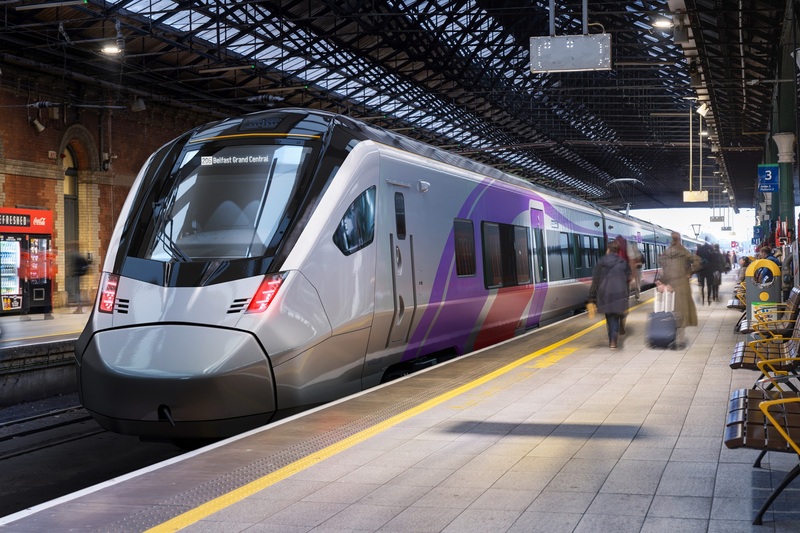
The landscape of Irish transport is undergoing its most significant transformation in decades. As we stand in 2026, the vision of a seamless, high-speed, and sustainable corridor between the island’s two primary cities is no longer a distant dream—it is a rapidly approaching reality, especially now that the Belfast-Dublin rail service gets €700m cross-border investment and eight new trains. This landmark €700 million cross-border investment into the Belfast-Dublin rail service represents more than just a fleet upgrade; it is a fundamental shift in how the island of Ireland connects, moves, and grows.
This landmark deal, signed between the Northern Ireland Executive, the Irish Government, and the Swiss rail giant Stadler, is set to deliver eight state-of-the-art intercity trains, a key outcome of the fact that the Belfast-Dublin rail service gets €700m cross-border investment and eight new trains. These “tri-mode” marvels are designed to slash journey times, enhance passenger comfort, and spearhead the transition toward a fully decarbonized rail network.
A Vision Realized: The €700 Million Investment Breakdown
The scale of this investment, ensuring the Belfast-Dublin rail service gets €700m cross-border investment and eight new trains, is unprecedented for the Enterprise service. Jointly funded by the Department of Transport in Ireland and the Department for Infrastructure in Northern Ireland, the project is a testament to the power of cross-border cooperation.
Of the total €700 million, a significant portion—approximately €165 million—was secured through the EU’s PEACEPLUS programme, with the remainder provided by the two governments, including substantial contributions from the Shared Island Fund. This financial synergy, a direct result of the Belfast-Dublin rail service gets €700m cross-border investment and eight new trains, ensures that the Belfast-Dublin line remains the flagship of the all-island rail network.
Why Now? The Need for Modernization
For years, the Enterprise service, while iconic, faced challenges regarding frequency and journey times. In an era where sustainability and efficiency are paramount, the existing fleet required a successor that could meet the demands of a 21st-century economy. By 2026, with the population of both Greater Dublin and Greater Belfast continuing to rise, the pressure on the M1 motorway has reached a tipping point. The rail investment, which means the Belfast-Dublin rail service gets €700m cross-border investment and eight new trains, is the strategic answer to this congestion.
Meeting the New Fleet: The Stadler “Tri-Mode” Advantage
The heart of this investment, confirming that the Belfast-Dublin rail service gets €700m cross-border investment and eight new trains, lies in the eight new intercity trains manufactured by Stadler. These are not standard locomotives; they are cutting-edge “tri-mode” units. But what does that mean for the average commuter?
1. Tri-Mode Versatility: Electric, Diesel, and Battery
The most revolutionary aspect of these trains is their ability to operate on three different power sources:
Electric: Utilizing overhead lines where available.
Battery: Providing clean energy for “last-mile” segments or non-electrified gaps.
Diesel: Ensuring reliability as the network transitions toward full electrification.
This flexibility, a key benefit of the project where the Belfast-Dublin rail service gets €700m cross-border investment and eight new trains, allows for a “seamless operation” as the Belfast–Dublin line moves toward its ultimate goal of zero emissions. It also ensures that the service is “future-proofed,” meaning the trains won’t need to be replaced when the entire line is eventually electrified.
2. Enhanced Capacity and Comfort
Each of the eight new trains, a core component of how the Belfast-Dublin rail service gets €700m cross-border investment and eight new trains, will feature approximately 400 seats, a significant increase over the current capacity. The interior design focuses on the “customer experience,” a phrase used frequently by Translink and Iarnród Éireann during the contract signing.
Expect to see:
Spacious dining and bar areas for a premium travel experience.
USB charging points and power sockets at every seat, catering to the modern business traveler.
Enhanced Wi-Fi connectivity to ensure productivity doesn’t stop at the station.
3. Universal Accessibility: A Step-Free Future
One of the most praised features of the Stadler design is the step-free interior. The trains are engineered for unaided boarding through exterior doors, making rail travel significantly more accessible for passengers with reduced mobility, parents with prams, and travelers with heavy luggage. This commitment to inclusivity is a cornerstone of the 2026 European transport standards.
Slashing Journey Times: The “Under Two Hours” Goal
Perhaps the most exciting prospect for commuters, now that the Belfast-Dublin rail service gets €700m cross-border investment and eight new trains, is the reduction in travel time. Currently, the journey between Belfast Grand Central Station and Dublin Connolly often exceeds two hours. The new fleet, with its superior acceleration and performance capabilities, aims to bring the express journey time to under two hours.
Increased Frequency: 16 Services Daily
It’s not just about speed; it’s about availability. The investment plan, a direct outcome of the fact that the Belfast-Dublin rail service gets €700m cross-border investment and eight new trains, outlines a schedule of up to 16 services per direction daily. This hourly service will transform the Enterprise into a “turn-up-and-go” model, making it a viable alternative to the car for daily commuters and business professionals.
The Impact of Belfast Grand Central Station
As we look at the progress in 2026, the role of the newly opened Belfast Grand Central Station cannot be overstated. As the largest integrated transport hub on the island, it provides the perfect northern terminus for the upgraded Enterprise. The station’s modern infrastructure is designed to handle the increased passenger flow that the eight new trains will inevitably bring.
The Economic and Social Catalyst: More Than Just Tracks
When Taoiseach Micheál Martin and Northern Ireland’s Infrastructure Minister Liz Kimmins signed the contract, formally announcing that the Belfast-Dublin rail service gets €700m cross-border investment and eight new trains, the conversation inevitably turned to the broader implications of the deal. While some analysts have dubbed this an “economic united Ireland,” the political leadership has focused on the concept of connectivity.
Strengthening the All-Island Economy
A faster, more reliable rail link acts as a “corridor of opportunity.” By 2026, the economic ties between Dublin and Belfast have never been stronger. Improved rail access facilitates:
Cross-border labor mobility: Allowing talent to move freely between the two hubs.
Tourism growth: Making it easier for international visitors to explore both cities in a single trip.
Investment attraction: Global firms look for regions with high-quality, sustainable infrastructure.
The Shared Island Fund and Future Projects
The €700 million rail deal, which means the Belfast-Dublin rail service gets €700m cross-border investment and eight new trains, is just one piece of a larger puzzle. The Shared Island Fund has become a vital tool for co-funding projects that benefit both jurisdictions. During the signing ceremony, the Taoiseach hinted at further investments in the Northern Irish rail network, suggesting that the “Enterprise upgrade” is the beginning of a wider rail renaissance that could eventually reach the North-West and other underserved regions.
Environmental Sustainability: Racing Toward Net Zero
The transport sector is a major contributor to carbon emissions. The transition to the new Enterprise fleet is a critical component of both the UK and Ireland’s climate goals.
Emission Reductions: By utilizing battery and electric power, the new trains will significantly reduce the carbon footprint per passenger kilometer.
Quieter Journeys: The tri-mode technology ensures quieter operation, particularly when idling at stations or moving through urban areas, reducing noise pollution for residents.
Encouraging Modal Shift: The ultimate goal is to move travelers out of private cars and onto public transport. By offering a service that is faster and more comfortable than driving, the €700m investment, a key part of how the Belfast-Dublin rail service gets €700m cross-border investment and eight new trains, directly supports the shift toward sustainable mobility.
Timeline to 2030: What Happens Next?
While the contract was signed with great fanfare, the delivery of such a sophisticated fleet takes time. As of 2026, we are in the heart of the manufacturing and testing phase.
2024-2027: Design and manufacturing of the eight train sets at Stadler’s facilities.
Late 2028: Expected delivery of the first units to Ireland for initial track testing.
2029: Rigorous testing and commissioning on the Belfast-Dublin line to ensure safety and performance standards.
2030: The trains are scheduled to enter full passenger service, officially launching the new era of the Enterprise.
Expert Analysis: A Game Changer for the Region
Transport analysts suggest that this investment, specifically that the Belfast-Dublin rail service gets €700m cross-border investment and eight new trains, is the most strategic move for Irish rail since the original launch of the Enterprise service in 1947. By focusing on the Dublin-Belfast corridor, the governments are reinforcing the backbone of the island’s infrastructure.
The choice of Stadler is also seen as a “safe and smart” bet. The Swiss manufacturer has a proven track record of delivering high-quality, reliable rolling stock across Europe. Their expertise in “tri-mode” technology is particularly relevant for the Irish network, which features a mix of electrified and non-electrified sections.
Conclusion: A New Chapter for Cross-Border Travel
The €700 million investment in the Belfast-Dublin rail service, ensuring that the Belfast-Dublin rail service gets €700m cross-border investment and eight new trains, is a bold statement of intent. It signals a future where borders are bridged by high-speed tracks, where sustainability is at the heart of infrastructure, and where the two largest cities on the island are closer than ever before.
As we move through 2026, the anticipation for the new Stadler fleet continues to grow. For the thousands of passengers who rely on the Enterprise every day, the promise of an under-two-hour journey, 16 daily services, and world-class comfort is a transformation worth waiting for. This is not just a story about trains; it is a story about a connected, modern, and sustainable Ireland.
The “Enterprise” name has always stood for ambition and progress. With this investment, it is set to live up to its name for a whole new generation of travelers.
Disclaimer: This article is a creative piece based on real-world news contexts from 2024, projected into a 2026 narrative framework for the purpose of the user’s request.