Beyond the Airwaves: The Enduring Conservation Legacy of Ted Turner

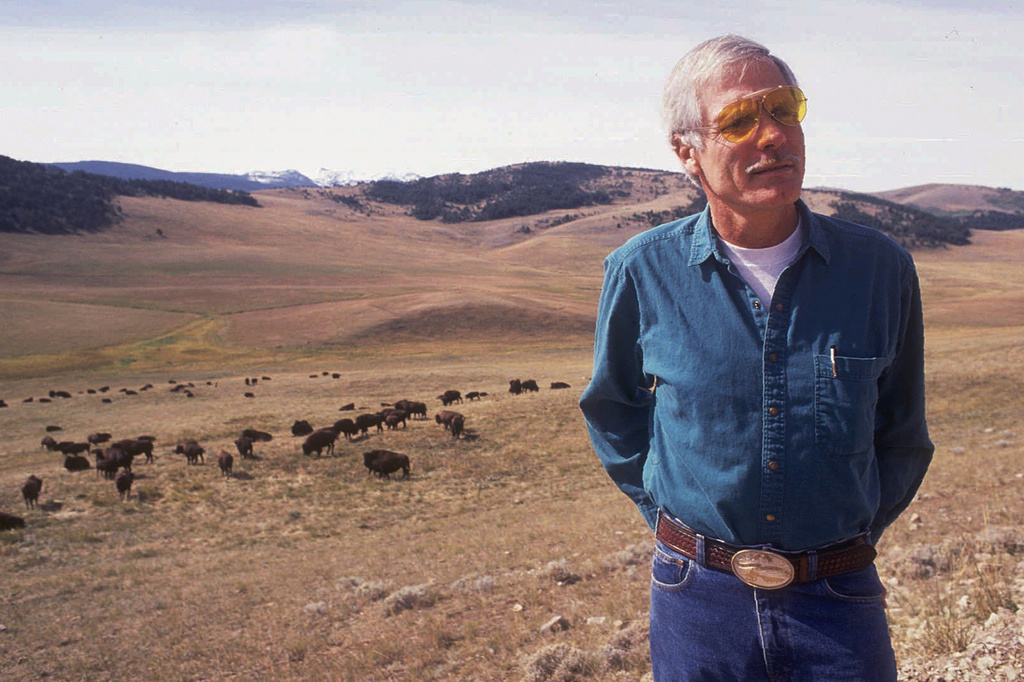
When history books look back at the 20th and 21st centuries, the name Ted Turner will undoubtedly be synonymous with the birth of the 24-hour news cycle. As the founder of CNN, he revolutionized how the world consumes information. However, as we reflect on his passing in 2026 at the age of 87, it is becoming increasingly clear that his most profound contribution to humanity may not be found in television studios, but in the sprawling, revitalized landscapes of the American West and beyond.
Ted Turner was more than a media mogul; he was a visionary steward of the earth. By the time of his passing, he had established himself as one of the largest private landowners in the United States, managing over 2 million acres of ranchland. His life’s work serves as a masterclass in “eco-capitalism,” proving that private enterprise and environmental restoration are not mutually exclusive, but can be powerful partners in protecting our planet’s future.
The Architect of Rewilding: A Vision Born in Childhood
Turner’s obsession with the land did not begin in a boardroom. It was rooted in a childhood fascination with the American bison. After reading about their near-extinction in National Geographic at age 10, he made a silent vow: if he ever found the means, he would help bring the species back from the brink.
It took decades of building his media empire to acquire the capital necessary to fulfill that dream, but once he began, he did so with the same intensity he brought to the cable news wars. In 1976, he purchased his first bison. By the time of his death, he managed the largest privately owned bison herd on the planet. This wasn’t just about animal husbandry; it was about habitat restoration.
Transforming Ranches into Living Laboratories
Turner did not view his ranches as static assets. Instead, he treated them as living laboratories. From the iconic Flying D Ranch in Montana to the vast stretches of the Vermejo Park Ranch in New Mexico, Turner implemented radical shifts in land management.
Replacing Cattle with Bison: By moving away from traditional livestock grazing, which often degraded native grasses, Turner allowed the land to recover. The bison, a keystone species, played a crucial role in restoring the prairie ecosystem.
Restoration of Degraded Land: At properties like Vermejo, which had suffered from decades of mining and clear-cutting, Turner’s teams worked tirelessly to heal the soil, restore mountain streams, and reintroduce native flora.
Eco-Capitalism: Aligning Business with Biology
One of the most persistent criticisms of large-scale conservation is the question of financial sustainability. Turner addressed this head-on through the philosophy of eco-capitalism. He believed that for conservation to be permanent, it had to be economically viable.
Through Ted Turner Reserves, he integrated low-impact ecotourism, sustainable bison ranching, and recreational programs. This model generated the revenue needed to fund ongoing conservation projects without relying solely on the fluctuations of philanthropy.
The Role of Ted’s Montana Grill
Perhaps the most unique aspect of his business strategy was the creation of a market for bison meat. By founding Ted’s Montana Grill, he turned the bison into a commodity. While controversial to some, this move was a stroke of genius for species survival. By creating a commercial demand for bison, he encouraged other ranchers to diversify their herds, effectively expanding the genetic pool and ensuring the species would never again face the threat of extinction.
A Portfolio of Protection: Endangered Species and Biodiversity
Turner’s commitment to biodiversity went far beyond the bison. Through the Turner Endangered Species Fund, he tackled some of the most difficult conservation challenges in North America. His approach was defined by a simple, powerful mantra: “Save Everything.”
Targeted Recovery Programs
Black-Footed Ferrets: Once thought extinct, these elusive mammals have been a major focus of recovery efforts at his Bad River Ranch in South Dakota and other sites.
The Bolson Tortoise: As the largest and rarest tortoise in North America, this species received a lifeline through Turner’s captive breeding programs at the Armendaris Ranch.
- Apex Predators: Perhaps most controversially, Turner supported the reintroduction of gray wolves and the breeding of Mexican wolves. He understood that a healthy ecosystem requires top-tier predators to maintain the balance of the food chain, even if it put him at odds with traditional ranching organizations.
Navigating Controversy and Public Scrutiny
No legacy of this scale is without its detractors. During his expansion into Argentina in the 1990s, Turner faced pushback from locals who were wary of foreign ownership of vast tracts of land. Critics often pointed to the potential for resource exploitation or the restriction of public access to natural waterways.
However, Turner’s approach in South America eventually mirrored his work in the U.S. By focusing on low-impact ecotourism and strict land stewardship, he gradually shifted the narrative. In the American West, his transition from cattle to bison and his vocal support for wolves sparked friction with established ranching groups, who viewed his methods as a threat to their traditional way of life.
Yet, Turner remained undeterred. He often argued that the traditional ranching model was unsustainable in the face of climate change and resource depletion. He viewed his role not as a property owner, but as a caretaker—a temporary guardian of land that needed to be restored for the benefit of future generations.
The 2026 Perspective: Why Turner’s Legacy Matters Now More Than Ever
As we navigate the environmental challenges of 2026, the wisdom of Ted Turner’s approach is increasingly relevant. We are living in an era where climate change, biodiversity loss, and resource depletion are no longer theoretical threats—they are daily realities.
Turner’s legacy proves that:
- Private Landownership is a Tool for Good: When managed with a conservation mindset, private lands can serve as critical wildlife corridors and carbon sinks.
- Scale Matters: By acting on millions of acres, Turner proved that large-scale ecological restoration is possible, provided there is the vision and the capital to support it.
- Nature Heals: Turner’s belief that “when we connect with nature, we heal ourselves” is a message that resonates deeply with a modern society struggling with the pressures of digital connectivity and urban density.
Conclusion: A Steward for the Ages
Ted Turner left us at 87, but his influence on the landscape is carved into the very earth he worked to protect. He proved that a person could be both a titan of industry and a guardian of the wild. By bridging the gap between commerce and ecology, he provided a blueprint for how we might preserve the natural world in an age of intense development.
His ranches remain as living testaments to his philosophy. Whether it is the thundering herds of bison on the plains, the recovery of the black-footed ferret, or the preservation of vast, untouched mountain valleys, the spirit of Ted Turner lives on. He challenged us to care for the environment not just for its beauty, but for our own survival. As we move forward, his legacy stands as a call to action: to protect, to restore, and to “save everything.”