The Final Broadcast: Remembering Ted Turner, the Maverick Who Changed How We Consume News

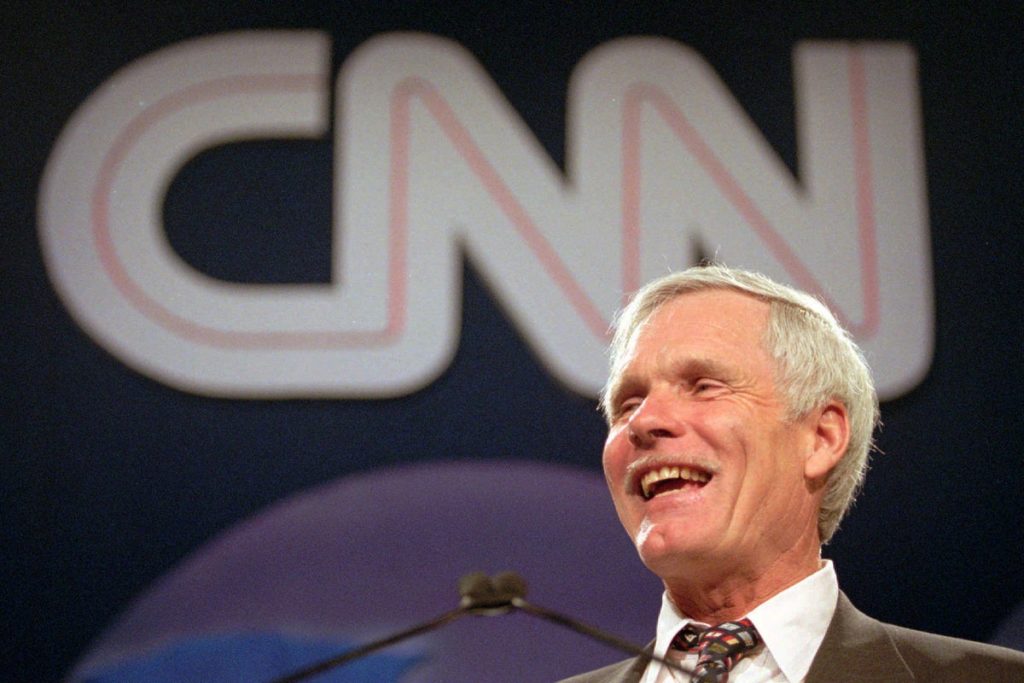
The media landscape of the 21st century—a world of instant notifications, global connectivity, and the relentless hum of the 24-hour news cycle—bears the indelible fingerprints of one man. Robert Edward “Ted” Turner III, the brash visionary, billionaire entrepreneur, and legendary sportsman, has passed away at the age of 87. The news that CNN founder Ted Turner dies at age 87 marks the end of an era for American television, closing the book on a life defined by audacity, risk-taking, and an unyielding commitment to the power of information.
Turner, often affectionately and sometimes mockingly referred to as “Captain Outrageous” or “The Mouth of the South,” didn’t just participate in the media industry; he dismantled its foundations and rebuilt them in his own image. From his early days managing his father’s billboard company to his final years as a dedicated philanthropist and environmentalist, Turner remained a larger-than-life figure whose influence spanned from the boardrooms of Atlanta to the highest echelons of global diplomacy.
The Birth of a Media Empire: From Billboards to Broadcasting
To understand the magnitude of Ted Turner’s legacy, one must look back at his unconventional path to power. Born in 1938, Turner’s early life was marked by both personal tragedy and professional ambition. Following the suicide of his father in 1963, a young Turner took the reins of Turner Advertising, transforming a regional billboard business into the engine that would eventually fund his entry into the broadcast world.
The SuperStation Revolution
In 1970, Turner purchased a failing independent UHF station in Atlanta. While others saw a weak signal and a dead-end investment, Turner saw a blank canvas. By 1976, he had pioneered a concept that would change the trajectory of cable television: the “SuperStation.” By transmitting his station’s content via satellite to cable systems nationwide, he effectively created a blueprint for the modern cable network, blending old movies, sitcom reruns, and, crucially, live sports.
His acquisition of the Atlanta Braves was a masterstroke of cross-promotion. By broadcasting the team’s games on his superstation, he didn’t just build a local fan base; he cultivated a national audience, proving that sports and television were the ultimate symbiotic pair.
CNN: The Catalyst for the 24-Hour News Cycle
If the SuperStation was his playground, CNN was his revolution. Launched in 1980, the Cable News Network was met with widespread skepticism. The visionary behind this groundbreaking venture, CNN founder Ted Turner dies at age 87, leaving a legacy that forever changed how the world consumes news. Critics dubbed it the “Chicken Noodle Network,” doubting that audiences had any interest in watching news at 2:00 a.m. or on a Sunday morning. Turner, however, was fueled by his own frustration with the limitations of the “Big Three” networks—ABC, CBS, and NBC—which shut down their news operations before the day was even over.
Defining Moments in Global Journalism
CNN’s rise to prominence was cemented during the 1991 Gulf War. While other networks retreated as conflict erupted in Baghdad, CNN’s reporters stayed, providing the world with unprecedented, real-time coverage of the war’s outbreak. This moment solidified CNN as the definitive source for breaking news, forever changing the expectations of the global audience.
Turner’s management style was as bold as his vision. He famously lived in an apartment above the network’s Atlanta offices in the early days, personally involved in every facet of the operation. His passing, as CNN founder Ted Turner dies at age 87, reminds us of the singular force behind this media revolution. While his later loss of control over the network following the merger with Time Warner in 1996 remained his greatest professional regret, his impact was already irreversible. The 24-hour news cycle was no longer a risky experiment; it was the global standard.
Beyond the Screen: A Life of Adventure and Philanthropy
While television was his primary medium, Turner’s life was defined by a restless desire to conquer every field he entered. Whether it was winning the America’s Cup in 1977 or becoming one of the largest private landowners in the United States, his appetite for life was insatiable.
The Land and the Bison
Turner’s love for the American West became a cornerstone of his later life. He acquired millions of acres, turning vast swaths of land into sanctuaries for the American bison. His commitment to conservation was not just a hobby; it was a scientifically backed effort to restore genetic diversity to the species. His donation of bulls to increase herd health in the southern Plains is just one example of how he applied his business-minded intensity to environmental stewardship.
Philanthropy and the $1 Billion Pledge
Perhaps the most significant chapter of his later life was his pivot toward global humanitarianism, a testament to the broad impact of the man whose passing, CNN founder Ted Turner dies at age 87, is now mourned globally. In 1997, Turner made the historic pledge to donate $1 billion to United Nations charities. This wasn’t merely a tax-deductible gesture; it was a fundamental shift in how the world viewed ultra-high-net-worth philanthropy. He co-founded the Nuclear Threat Initiative with former Senator Sam Nunn, dedicating his personal fortune to reducing the dangers posed by weapons of mass destruction.
The Personality Behind the Legend
Ted Turner’s life was not without controversy. His “shoot-from-the-lip” style often landed him in hot water, and his outspoken nature frequently alienated those who preferred the polished, reserved tone of traditional media moguls. His marriage to actress Jane Fonda, which lasted from 1991 to 2001, kept him in the public eye, blending the worlds of high-stakes media and Hollywood glamour.
Despite his flaws, his ability to acknowledge them was part of his charm. He famously quipped, “If only I had a little humility, I’d be perfect,” a statement that perfectly encapsulated the self-aware bravado that made him such a magnetic public figure. In his later years, he faced the challenges of Lewy body dementia with the same stoicism he brought to his business battles, ultimately passing away surrounded by his family. The world now reflects on the immense contributions of CNN founder Ted Turner dies at age 87.
A Legacy of Disruption
The passing of Ted Turner is more than just the loss of a pioneer; it is a moment to reflect on how one person’s ambition can fundamentally shift the culture of an entire civilization. As news spreads that CNN founder Ted Turner dies at age 87, we are reminded of his profound impact. He forced the world to be more connected, more informed, and more aware of the global stage.
His career serves as a masterclass in risk management and visionary thinking. He saw the potential in satellite technology when others saw only expense; he saw the potential in 24-hour news when others saw only boredom; and he saw the potential in environmental conservation when others saw only land for development.
What We Can Learn from “Captain Outrageous”
- Don’t Fear Failure: Turner’s career was built on high-stakes gambles that many predicted would fail.
- Control Your Narrative: From his billboard days to his news empire, Turner understood the power of controlling the message.
- Give Back with Purpose: His commitment to the UN and the Nuclear Threat Initiative proved that wealth is best utilized when it addresses existential threats to humanity.
Conclusion: The Final Sign-Off
Ted Turner leaves behind a media landscape that is vastly different from the one he entered. He was a titan of industry whose name will forever be synonymous with the rise of cable television. The world now acknowledges that CNN founder Ted Turner dies at age 87, marking the end of an era. As we look at the modern digital news environment, we see the echoes of the CNN model in every livestream, every push notification, and every breaking news alert.
While he may no longer be here to push the boundaries, his influence remains embedded in the DNA of global journalism. He was a man who lived multiple lifetimes in one, a sailor, a rancher, a lover, and a revolutionary. As the world mourns the loss of one of its most colorful figures, we are reminded that true legacy isn’t built on the money one leaves behind, but on the institutions and ideas that continue to shape the world long after the final broadcast.
Ted Turner’s life was an adventure, and though the screen has gone dark with the news that CNN founder Ted Turner dies at age 87, the news cycle he set into motion continues to turn, serving as a permanent monument to his relentless, groundbreaking spirit.