Quebec Aerospace Soars: Airbus Secures Historic 150-Plane A220 Deal with AirAsia

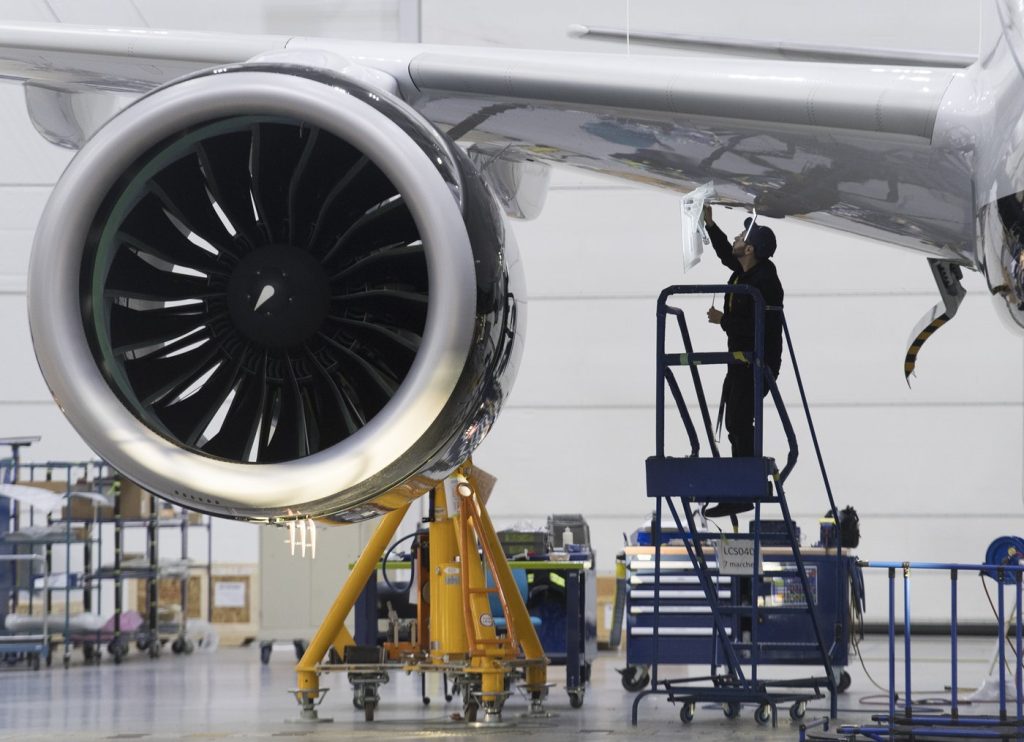
The global aviation landscape shifted significantly on May 6, 2026, as Airbus Canada officially announced a landmark agreement that promises to redefine the future of regional and mid-range air travel. In a multibillion-dollar coup for the Canadian aerospace sector, low-cost carrier AirAsia has committed to an order of 150 Airbus A220 jets. This massive procurement represents the largest single firm order in the history of the A220 program, cementing Quebec’s status as an indispensable pillar of the global aerospace market and aviation supply chain.
For the Mirabel-based production facility, this deal is not merely a financial win; it is a strategic validation of the A220’s technological prowess and aerospace innovation. As Airbus looks to scale its operations, this partnership with one of Southeast Asia’s most aggressive low-cost carriers signals a new era of growth for the single-aisle aircraft and narrow-body jet market.
A Strategic Milestone for Quebec’s Aerospace Industry
The announcement, hosted at the Airbus assembly plant in Mirabel, Quebec, was attended by high-profile government officials, including Prime Minister Mark Carney. The presence of federal leadership highlights the government’s growing focus on diversifying international trade and bolstering high-tech manufacturing within Canada, serving as a significant economic growth driver.
Why the A220 is a Game-Changer
The Airbus A220, originally developed as the Bombardier CSeries, has long been touted for its fuel efficiency, reduced noise footprint, and superior cabin comfort, aligning with sustainable aviation goals. For AirAsia, which operates a vast network of short-to-medium-haul routes, the A220 offers the perfect balance of range and economy. By integrating these Canadian-made jets into their fleet, AirAsia is positioning itself for significant fleet modernization to optimize operational costs and enhance airline operational efficiency while expanding its footprint across the competitive Southeast Asian aviation market.
Lars Wagner, head of the Airbus commercial aircraft division, emphasized that the order is a testament to the talent and dedication of the Quebec workforce. This deal underscores that despite global economic fluctuations, the aerospace sector remains a vital engine for the Canadian economy, driving innovation and providing high-skilled employment opportunities in the Montreal region.
Addressing Production Challenges: The Path to Profitability
While the AirAsia order is a cause for celebration, it also brings the realities of industrial scaling and meeting ambitious aircraft production targets into sharp focus. Currently, the Mirabel plant has faced significant production hurdles, struggling to maintain an average output of seven jets per month. Industry analysts note that this rate is roughly half of what is required for the program to achieve a break-even point.
Scaling Up for Success
To fulfill an order of 150 aircraft, Airbus must accelerate its assembly line efficiency. This will likely involve:
Supply Chain Optimization: Strengthening relationships with local Quebec suppliers to ensure a steady flow of components.
Workforce Expansion: Investing in training programs to increase the headcount of skilled aerospace engineers and technicians in the Mirabel area.
- Advanced Manufacturing Integration: Utilizing AI-driven diagnostics and automation to reduce bottlenecking on the assembly floor.
Western University professor Geraint Harvey described the deal as “great news” for the federal government and the labor force. The challenge now lies in execution. If Airbus can successfully ramp up production to meet the demands of this massive contract, it will effectively prove the long-term viability of the A220 program on a global scale.
The Global Context: Diversifying Trade and Market Reach
The significance of this partnership extends beyond the manufacturing plant. In an era of shifting geopolitical alliances, Prime Minister Mark Carney’s support for the deal reflects a broader Canadian strategy to look beyond traditional markets like the United States and capitalize on emerging aviation industry trends. By securing a major foothold in the Southeast Asian market—a region experiencing some of the fastest growth in passenger air travel—Canada is effectively planting its flag in one of the 21st century’s most important economic zones.
A Pivot to Asia
AirAsia’s decision to choose the A220 for its expansion push is a calculated move. The airline, known for its low-cost model, requires aircraft that can perform reliably on short-haul routes while maintaining low maintenance and fuel costs per seat. The A220’s design—which features cutting-edge advanced materials and advanced engine technology—provides the flexibility required for the high-frequency flight schedules that define the budget airline business model.
The “CSeries” Loop: A Full-Circle Moment
Industry observers have noted that this deal closes a long-standing loop in aviation history. Years ago, when the platform was still under the Bombardier umbrella as the CSeries, AirAsia had evaluated the aircraft but ultimately opted for different models. The fact that they have returned to the program now—under the Airbus banner—serves as a powerful endorsement of the platform’s evolution. It suggests that the “Airbus touch,” combined with the robust engineering of the original Canadian design, has finally hit the sweet spot for global carriers.
Looking Ahead: The Future of the Mirabel Hub
As we look toward the remainder of 2026 and beyond, the Mirabel facility will be under the microscope. The pressure to deliver 150 jets will be immense, but the potential rewards are equally significant. If successful, this project could serve as a blueprint for future large-scale international agreements, proving that Canadian aerospace manufacturing can compete with the best in the world.
Key Takeaways for the Aviation Industry
- Market Confidence: The sheer size of the AirAsia order signals strong confidence in the A220’s long-term market performance.
- Economic Impact: The multibillion-dollar contract will provide long-term job security for thousands of workers in Quebec.
- Strategic Positioning: Canada’s move to strengthen ties with Southeast Asian carriers is a savvy geopolitical maneuver that diversifies the nation’s trade dependencies.
In conclusion, the Airbus-AirAsia deal is more than just a headline; it is a pivotal moment for Quebec’s aviation industry. It represents the intersection of Canadian engineering excellence, global trade ambition, and the necessity of industrial scaling. While the road ahead requires overcoming significant production bottlenecks, the foundation laid this May in Mirabel is undeniably strong. The world will be watching closely as these 150 jets make their way from the assembly line to the skies over Southeast Asia.